
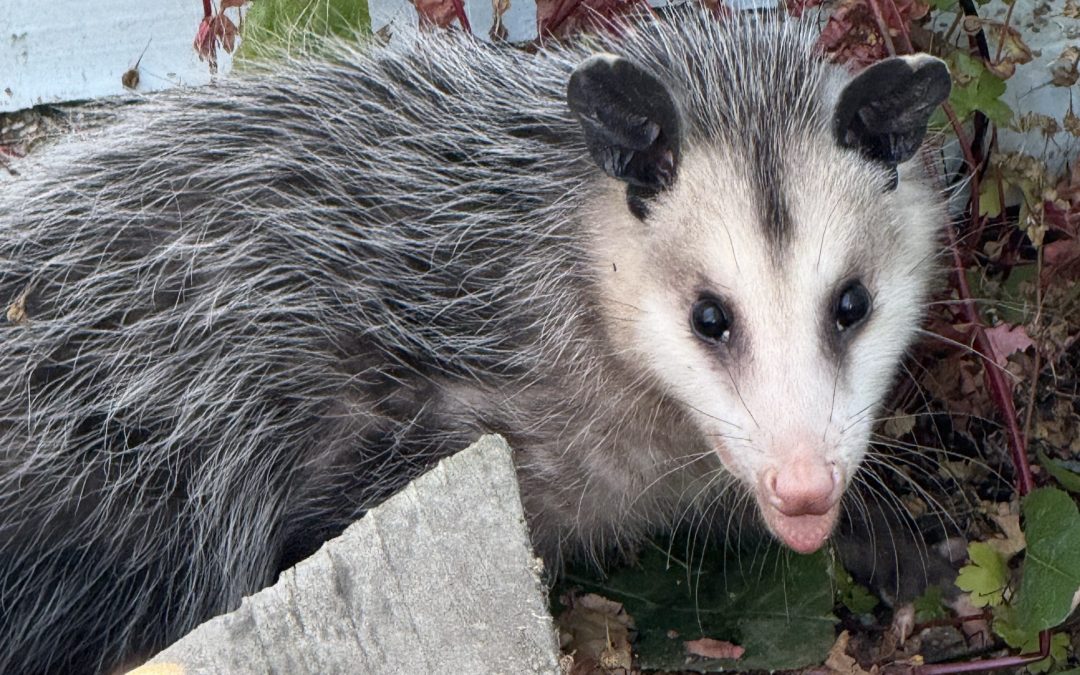
It’s dark outside. You let the dog out one last time before bed and catch a pair of glowing eyes and a ghostly face staring back at you from under the deck. It’s not a cat. It’s not a raccoon. It looks like a giant rat that somehow wandered into a Halloween costume store.
Congratulations. You’ve found an opossum.
For many homeowners, that first encounter raises a lot of questions. Is it dangerous? Is it living under my house? Is it going to attack my pets? Why is it here in the first place?
The good news is that opossums are usually more helpful than harmful. In fact, they’re one of the few urban wildlife species that often end up doing homeowners more favors than trouble. Let’s take a closer look at these odd little marsupials and why they seem so comfortable living alongside us.
Key Takeaways
- Opossums are common in urban and suburban Oregon environments.
- They are generally non-aggressive and prefer to avoid confrontation.
- Opossums are attracted to food, water, and shelter around homes.
- They can help reduce populations of insects, rodents, and carrion.
- Most conflicts can be prevented through habitat modification and exclusion.
What Exactly Is an Opossum?
The Virginia opossum is North America’s only native marsupial. Unlike most mammals, females carry their young in a pouch after birth, much like a kangaroo.
Adults typically weigh between 4 and 14 pounds and have:
- Wiry gray fur
- A pointed white face
- Dark ears
- A long, hairless prehensile tail
- About 50 teeth, more than any North American mammal
They’re not particularly fast, strong, or intimidating. In fact, their survival strategy is largely built around convincing predators that they’re more trouble than they’re worth.
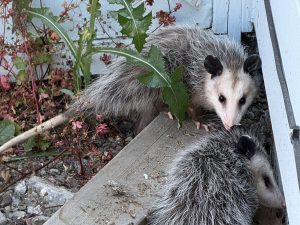
A pair of opossums taking advantage of a protected space beneath a backyard lumber pile. Urban environments provide food, water, and shelter that can attract wildlife like opossums.
Why Are Opossums So Common in Cities?
If you were designing the perfect opossum habitat, it would look surprisingly similar to a suburban neighborhood.
We provide everything that the Opossum needs:
- Reliable water sources
- Pet food
- Bird feeders
- Fallen fruit
- Compost piles
- Dense landscaping
- Crawlspaces and sheds
Add a nice pile of discarded lumber and construction materials for them to hide in during the day and your property is starting to look like an all-inclusive resort!
Urban environments also provide something many natural environments don’t: relatively mild winters and fewer predators.
What Are They Doing in My Yard?
Most of the time, they’re just looking for food.
Opossums are opportunistic omnivores. They’ll eat:
- Insects
- Slugs and snails
- Fallen fruit
- Bird seed
- Carrion
- Pet food
- Rodents
- Eggs
They’re not picky.
One of the reasons wildlife professionals tend to be fairly tolerant of opossums is that they spend much of their time consuming the things we’d rather not have around anyway.
Think of them as nature’s clean up crew.
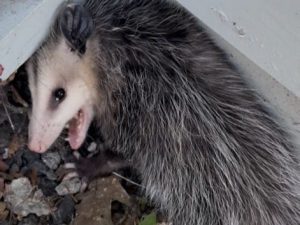
Despite the dramatic display, opossums are generally non-aggressive animals. Hissing and baring their teeth are defensive behaviors designed to convince predators to leave them alone.
Are Opossums Dangerous?
This is probably the biggest misconception about them.
Opossums are surprisingly docile animals. When threatened, their first instinct is usually to:
- Freeze
- Show their teeth
- Hiss dramatically
- Faint from sheer commitment to the performance
The famous phrase “playing possum” is actually real. Under extreme stress, they can enter an involuntary catatonic state that makes them appear dead.
It’s not an act. It’s a biological panic button.
While they can bite if cornered, most opossums would rather flee than fight.
What about diseases and parasites?
Like any wild animal, opossums can carry parasites and diseases, but the risk to people and pets is usually low when they are left alone. The main concerns are indirect exposure to fleas, ticks, urine, or droppings, which can potentially spread illnesses such as leptospirosis, salmonellosis, or tick-borne disease. Rabies is possible in any mammal, but it is considered uncommon in opossums compared with animals such as bats, raccoons, and skunks. The safest approach is simple: do not handle opossums, and keep pets and kids from interacting with them.
When Do Opossums Become Pests?
Most homeowners never have a serious issue with opossums. Problems usually occur when they decide to move in rather than simply pass through.
Common trouble spots include:
- Under decks
- Crawlspaces
- Sheds
- Wood piles
- Abandoned structures
They can also become a nuisance if they’re regularly feeding on:
- Pet food
- Chicken feed
- Bird seed
- Compost
In some cases, they may raid backyard chicken coops for eggs, although they’re generally far less destructive than raccoons, mink, or skunks.
How to Make Your Property Less Attractive
The good news is that opossums are usually easy to discourage.
Start with the basics:
- Bring pet food indoors at night.
- Clean up fallen fruit from trees.
- Secure garbage cans with tight-fitting lids.
- Remove brush piles and clutter.
- Trim-up low, dense vegetation near structures and around the yard, removing shadows and reducing harborage.
- Install hardware cloth barrier around decks and sheds.
- Repair damaged vents and foundation screens.
Most wildlife problems can be solved by making the property less appealing than the neighbor’s.
Not that we’re encouraging competition.
What If One Is Living Under My House?
If an opossum has taken up residence under a deck, porch, or crawlspace, resist the urge to immediately trap it.
First, determine whether there are young involved.
Female opossums often use sheltered areas while raising babies. Excluding a mother without checking for dependent young can create a much bigger problem than the one you started with.
Our wildlife professionals can help determine:
- Whether the animal is simply passing through
- Whether young are present
- The best exclusion strategy
- How to permanently seal the area afterward
When to Call a Professional
You should consider professional help if:
- An opossum is living under a structure.
- You suspect animals are entering your crawlspace or attic.
- You have repeated wildlife activity despite prevention efforts.
- The animal appears sick, injured, or unusually aggressive.
Most opossum conflicts can be solved without extensive trapping, but proper exclusion is critical if you want lasting results.
Final Thoughts
Opossums aren’t going to win any beauty contests. They are what I like to call “Ugly-Cute” or as the Japanese say, “busakawai”, like my dog Cleo or Pete Davidson. Regardless, they’re one of the more beneficial wildlife species you’re likely to encounter around your home.
They’re scavengers, insect eaters, and generally peaceful neighbors that would rather avoid you altogether.
That said, when wildlife starts turning your property into its permanent address, it’s usually time to make a few adjustments.
If you’ve got an opossum living under your deck, hanging around the chicken coop, or making itself a little too comfortable around your home, give Good Earth Pest Company a call. We can help identify what’s attracting it, recommend exclusion measures, and help you keep wildlife where it belongs—wild.