
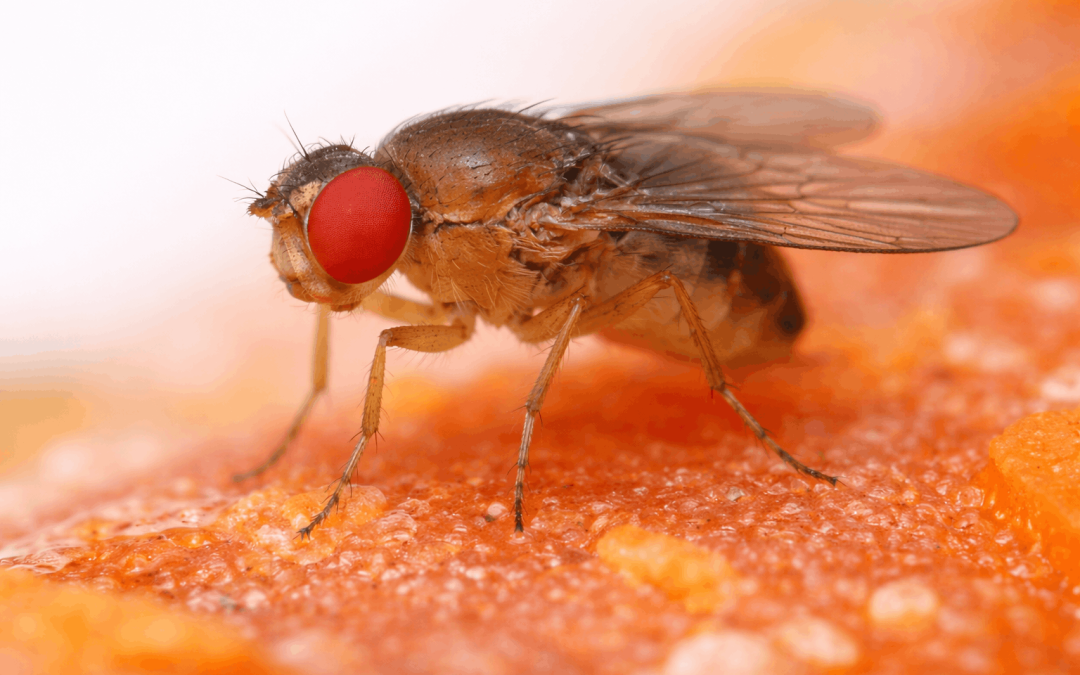
Breweries and wineries create something fruit flies are biologically designed to find: fermentation.
Crushed grapes, mash tuns, spent grain, sugary residues, and floor drains with organic buildup all create ideal breeding conditions. When fruit flies show up in a production facility or tasting room, it’s rarely random. It’s usually a signal.
The solution isn’t just spraying adult flies. Sustainable control comes from identifying and removing breeding material — especially in drains — and using tools like bioactive cleaners and foam applications strategically within a larger IPM plan.
Key Takeaways
-
Fruit flies are attracted to fermenting sugars and yeast activity.
-
Drain biofilm is one of the most common breeding sources in breweries and wineries.
-
Bioactive cleaners break down organic buildup that supports larvae.
-
Foam applications improve contact with vertical drain surfaces.
-
Long-term control focuses on sanitation and moisture management first.
Understanding the Pest
Primary species encountered:
-
Drosophila melanogaster
-
Drosophila suzukii (especially around vineyards and crush season)
Fruit flies complete their life cycle in 7–10 days under warm production conditions. Females lay eggs directly into fermenting organic material. In commercial beverage facilities, this often includes:
-
Floor drain biofilm
-
Residue under equipment
-
Spent grain storage areas
-
Pomace bins
-
Bar fruit or taproom garnishes
If adults are present consistently, breeding is occurring somewhere inside the facility.
How to Identify Fruit Flies
Color: Tan to light brown
Eyes: Prominent red eyes (most common species)
Flight: Hovering, erratic
Hotspots: Drains, fermentation areas, taps, waste storage
Don’t Confuse with Drain Flies
Drain flies (moth flies) are fuzzy and triangular when resting. Fruit flies are smooth-bodied and more agile fliers. Control strategies differ significantly, so identification matters.
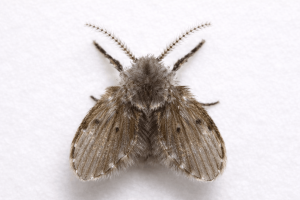
Drain flies (moth flies) develop in organic biofilm inside floor drains and are commonly mistaken for fruit flies in breweries and wineries.
Why Breweries and Wineries Are Vulnerable
Fermentation environments are naturally attractive. Even well-managed facilities produce:
-
Sugary vapor
-
Yeast-rich residue
-
Moist floor drains
-
Seasonal organic surges (harvest/crush)
Fruit flies can:
-
Create negative guest impressions in tasting rooms
-
Complicate inspections
-
Introduce spoilage organisms like acetic acid bacteria
-
Signal sanitation breakdowns
This isn’t about “dirty facilities.” It’s about managing biological reality.
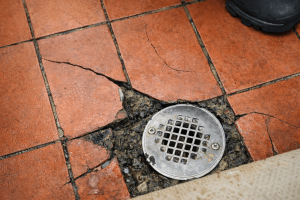
Damaged tile and failing grout around floor drains create protected voids where moisture and organic debris accumulate, supporting fruit fly and drain fly breeding.
The Real Breeding Source: Drain Biofilm
In most chronic cases, the problem isn’t what’s visible on the floor — it’s what’s lining the drain.
Organic buildup forms a gelatinous biofilm on vertical pipe walls. Eggs are laid inside that protected layer. Surface rinsing does little to remove it.
This is where bioactive cleaners and foam applications become critical tools.
Bioactive Cleaners in Fruit Fly Management
Bioactive cleaners use living bacteria and/or enzymes to digest organic material inside drains and on surfaces.
Their role in IPM:
-
Break down biofilm that supports larvae
-
Reduce organic odor that attracts adults
-
Improve sanitation without harsh chemical corrosion
-
Support long-term maintenance programs
In beverage facilities, they are particularly useful because they:
-
Are compatible with regular sanitation cycles
-
Help maintain drains between deep cleanings
-
Reduce rebound populations
However, they require consistency. One application rarely solves an established issue.
Foam Applications for Vertical Contact:
Standard liquid treatments often run straight through drains without contacting the vertical pipe walls where larvae develop.
Foam formulations expand and cling to:
-
Pipe walls
-
Drain traps
-
Crevices
This improves contact time and helps deliver active ingredients directly to breeding zones.
Foam may be used to apply:
-
Bioactive products
-
Insect growth regulators
-
Targeted labeled insecticides (when appropriate)
In IPM programs, foam is not a substitute for mechanical cleaning — it complements it.
Prevention (IPM-First Strategy)
1. Mechanical Drain Cleaning
-
Physically scrub drains to remove established biofilm
-
Remove drain covers during deep sanitation
2. Bioactive Maintenance Program
-
Scheduled enzyme/bacterial applications
-
Increased frequency during harvest or high-production periods
3. Foam Treatments (When Needed)
-
Apply to vertical drain surfaces
-
Rotate tools seasonally based on pressure levels
4. Moisture Management
-
Eliminate pooling water
-
Correct floor slope issues
-
Dry mop after washdowns
5. Waste Handling
-
Prompt removal of pomace and spent grain
-
Clean transfer pumps and hoses thoroughly.
DIY Measures for Light Activity
For early detection or minor activity:
-
Apple cider vinegar monitoring traps (to confirm presence)
-
Nightly removal of bar fruit
-
Increased sanitation frequency
-
Immediate cleanup of spills
But if breeding has established in drains, DIY alone rarely resolves the issue.
When to Call a Professional
Professional intervention is recommended when:
-
Flies persist despite sanitation improvements
-
Activity spikes during crush or brewing cycles
-
Drain systems are complex or inaccessible
-
Documentation is needed for inspection compliance
At Good Earth Pest Company, our approach is straightforward:
-
Identify breeding sources
-
Implement mechanical corrections
-
Integrate bioactive drain programs
-
Use foam and targeted treatments strategically
-
Monitor and adjust seasonally
Chemical control is a tool — not the foundation.
Final Thoughts
In breweries and wineries, fruit flies are drawn to exactly what makes your product special: fermentation.
The goal isn’t to eliminate attraction — that’s unrealistic. The goal is to eliminate breeding.
When mechanical cleaning, bioactive maintenance, foam applications, and moisture control work together, fruit flies become a manageable operational variable rather than a recurring frustration.