
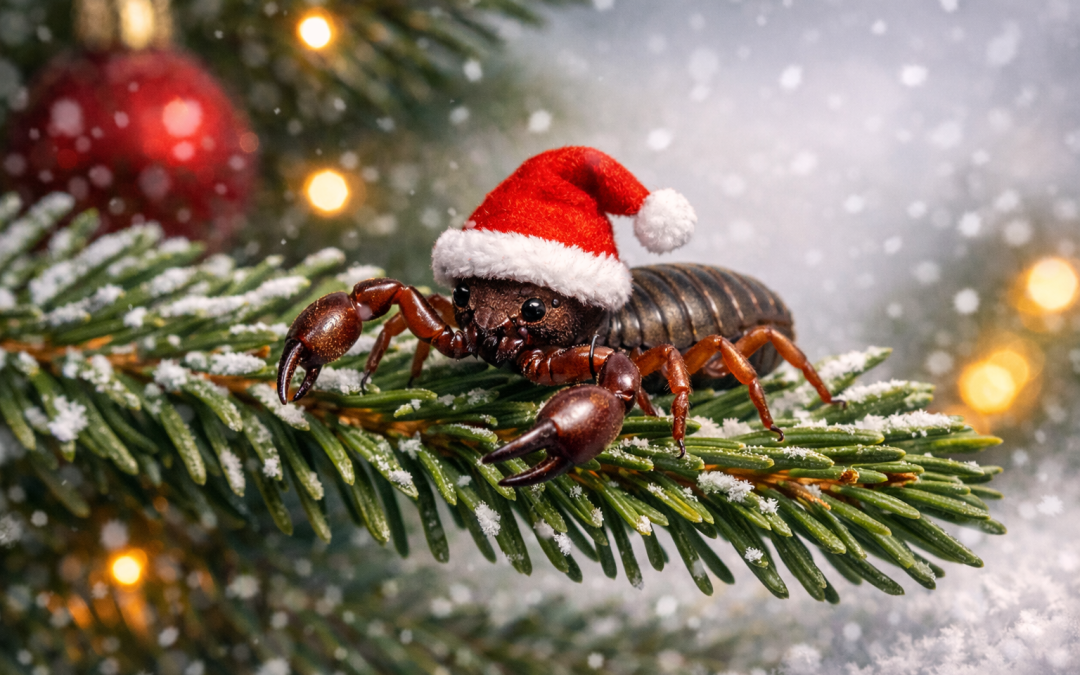
If you’ve ever spotted a tiny, scorpion-looking creature in your home around the holidays, don’t panic — it might be a pseudoscorpion, and it may have arrived on your Christmas tree.

Pseudoscorpions are very small arachnids, typically only a few millimeters long. They resemble true scorpions at first glance but lack a tail or stinger. Instead, they have small pincers (called pedipalps) that they use to capture tiny prey like mites, booklice, and other nuisance insects.

How Do Pseudoscorpions End Up on Christmas Trees?

Live Christmas trees come from outdoor environments where pseudoscorpions naturally live — under bark, in leaf litter, and in forest debris. When a tree is cut and brought indoors, these tiny beneficial predators can occasionally hitch a ride inside along with other harmless outdoor arthropods.

Because pseudoscorpions are cold-tolerant and slow-moving, they may not become noticeable until the tree has been indoors for several days and temperatures warm up.

Are Pseudoscorpions Dangerous?

No. Pseudoscorpions are harmless to people, pets, and structures. They do not bite, sting, infest homes, or reproduce indoors. In fact, they’re considered beneficial, as they feed on other tiny pests.

If you find one, the best solution is simple:

  • Gently capture it with a tissue or cup

  • Release it outdoors

Can Pest Control Prevent This?

This is a good example of why not all insects found indoors indicate a pest problem. Pseudoscorpions don’t require treatment, and pesticide use isn’t recommended or necessary. A quick inspection of a live tree before bringing it inside — shaking it outdoors or letting it acclimate in a garage — can reduce the chances of bringing in harmless hitchhikers.

Final Thought

Finding a pseudoscorpion around the holidays can be surprising, but it’s ultimately a reminder that live Christmas trees come from real ecosystems. In this case, the visitor is temporary, beneficial, and nothing to worry about — just another tiny part of nature tagging along for the season.

 

{

Besides keeping our home free of carpenter ants and rats, the office staff is always super-friendly and helpful when I contact them.

Don Hall

via Facebook

Never seen a rodent in my house and don’t want to. I credit Good Earth for keeping the little critters OUT! Best company EVER!!!

Rebecca Butler

via Google

This business goes above and beyond customer service. Each employee brings something to the table. They are easy to communicate with and I recommend them to you.

Michelle C

via Yelp

Good Earth is reliable, affordable, and careful about their work. Their staff is consistently friendly and professional. We’re happy.

Owen Dell

via Google

I wouldn’t think of calling anyone else! Amazing customer service!!!!!!

Laura Schell

via Facebook

Prompt, friendly, very good at what they do. I would recommend them to anyone needing pest control services.

Alan Van Dyke

via Facebook

First visit. Joe was on time, very personable and took the lead on what we needed. Very please to find this service.

Nancy Dixon

via Google

The technicians do a great job. Knocks to make sure we are here and dogs are safe before he does the job. Very professional.

Larry Massaglia

via Google

Good Earth Core Values

These values are the guide to every decision we make.

  1. Going above and beyond expectations for our clients.
  2. Accountability and integrity in everything we do.
  3. Safety for the environment, our clients, and ourselves.
  4. The Good Earth Family: Work as a team and always treat each other with respect and support.

Connect

Contact

Visit:
29030 Hwy 34
Corvallis, Oregon
97333-2220

    Request a Quote or Inspection

    By providing your phone number, you agree to receive automated text messages from Good Earth Pest Company for appointment notifications, reminders, and review requests. Message frequency may vary. Message and data rates may apply. Reply STOP to opt out at any time. I accept the Terms of Service & Privacy Policy.

    Hard on Bugs. Soft on You.

    A Local Family Business

    Serving Oregon since 1989