
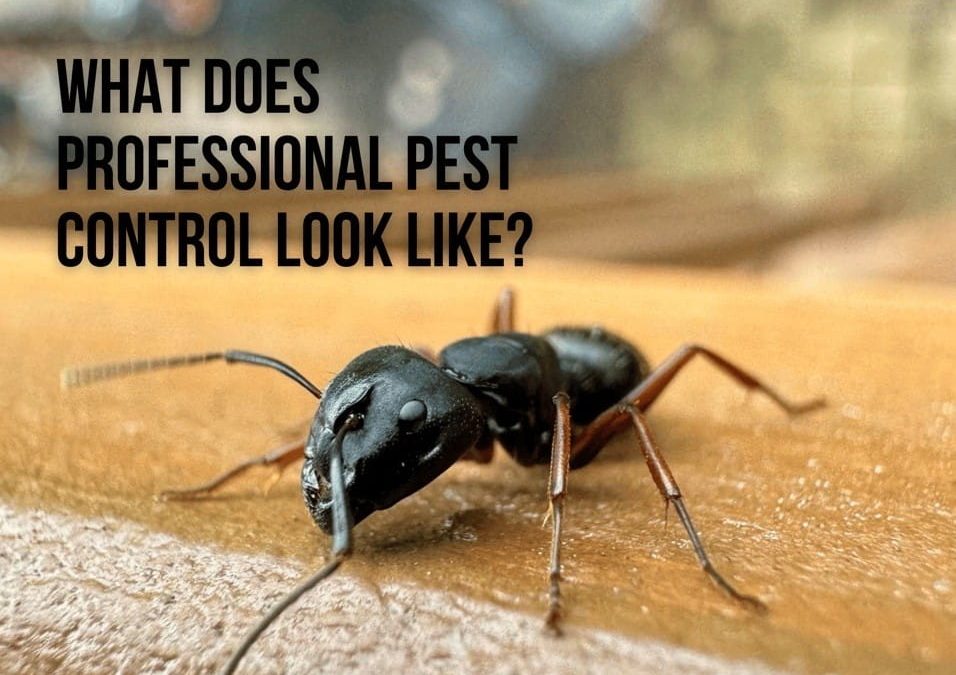
If you’ve never hired a pest control company before, you probably have a picture in your head of what it’s going to look like.
Maybe a technician shows up in a white suit looking like they’re about to decontaminate a spaceship. Maybe they spray everything that doesn’t move and leave a chemical smell lingering for the next week. Maybe you’re wondering if you’ll have to pack up the kids, the dog, and grandma and spend the night in a hotel.
I don’t blame you. That’s how pest control has been portrayed for years.
The reality is…it’s a lot less dramatic.
At Good Earth Pest Company, our goal isn’t to spray as much as possible. Our goal is to solve your pest problem with the least amount of disruption to your home, your family, and your daily routine. Here’s what you can expect when we come to your home.
Key Takeaways
- Every service begins with an inspection and conversation.
- We use the principles of Integrated Pest Management (IPM) to solve pest problems, not just treat symptoms.
- Treatments are targeted and deliberate—not blanket applications.
- Most services allow you to remain in your home during and after treatment.
- Communication is one of the most important parts of every visit.
Step One: We Listen
Every home is different. Maybe you’ve got ants in the kitchen, maybe you’re hearing scratching in the attic, maybe yellowjackets have decided your deck is now their deck.
Whatever brought you to us, the first thing we’ll do is ask questions:
- Where are you seeing activity?
- How long has it been happening?
- Has anything changed around the home?
These questions help us build a picture of what’s actually going on. Sometimes the pest you think you have isn’t the pest you actually have, and treating the wrong problem never ends well.
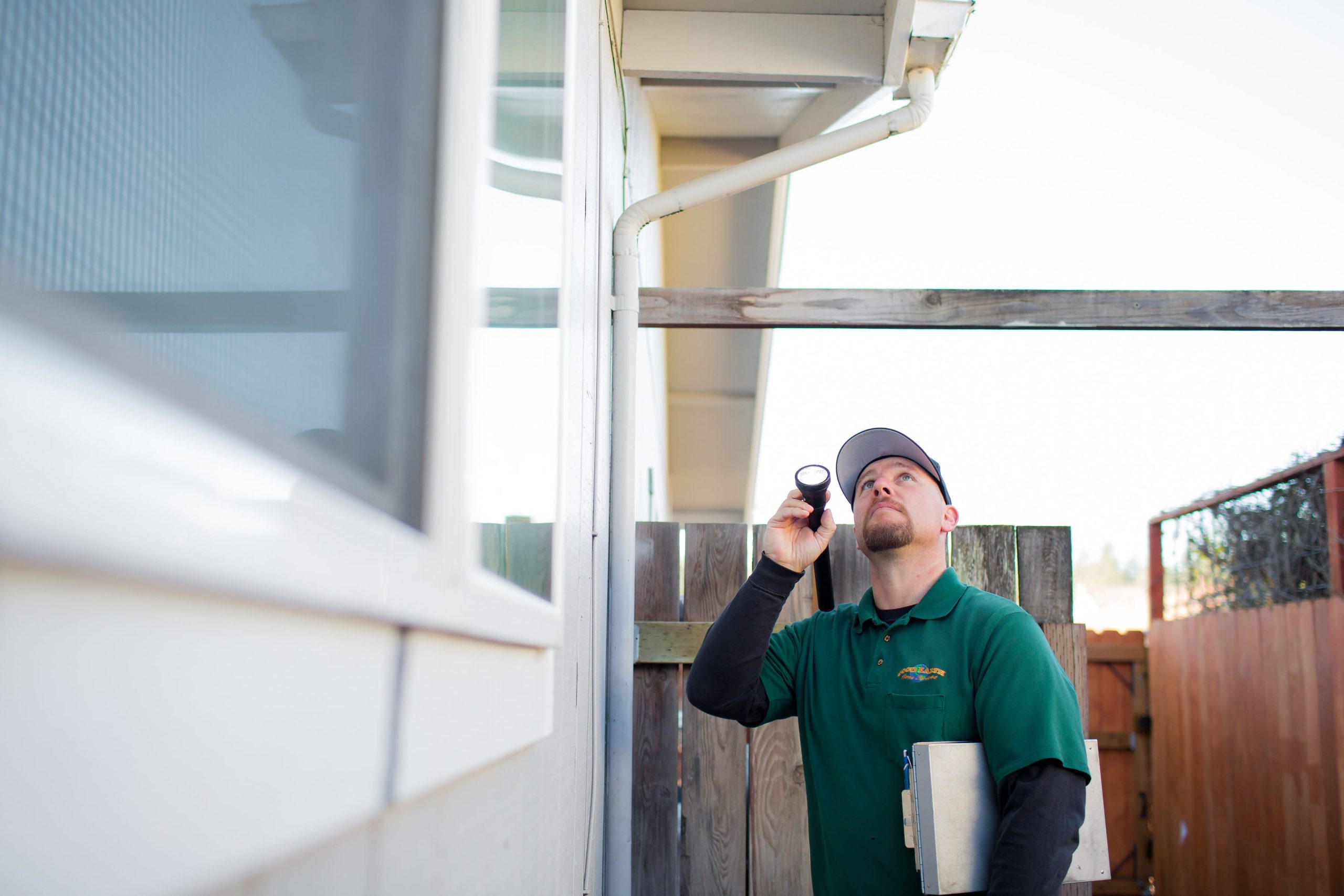
A thorough inspection helps identify pest activity, entry points, and conditions that may contribute to a problem
Step Two: We Inspect
Once we’ve talked, it’s time to look around.
Depending on the pest, that inspection may include:
- The foundation
- Landscaping
- Eaves and rooflines
- Crawlspaces
- Garages
- Attics
- Interior living spaces
We’re looking for much more than the pest itself. We’re looking for why the pest is there. Where are they getting in? What’s attracting them? What conditions are allowing them to thrive?
Finding those answers is often more valuable than simply finding the pest.
Step Three: We Build a Plan
This is where Integrated Pest Management—or IPM—comes into play.
Rather than reaching for pesticides first, we ask:
- Can this be solved by exclusion?
- Is there a moisture issue?
- Is sanitation contributing?
- Are there landscaping changes that would help?
- Would a bait be more effective than a spray?
- Is treatment even necessary?
Sometimes the answer is a pesticide. Sometimes it isn’t. Most of the time, it’s a combination of several approaches working together.
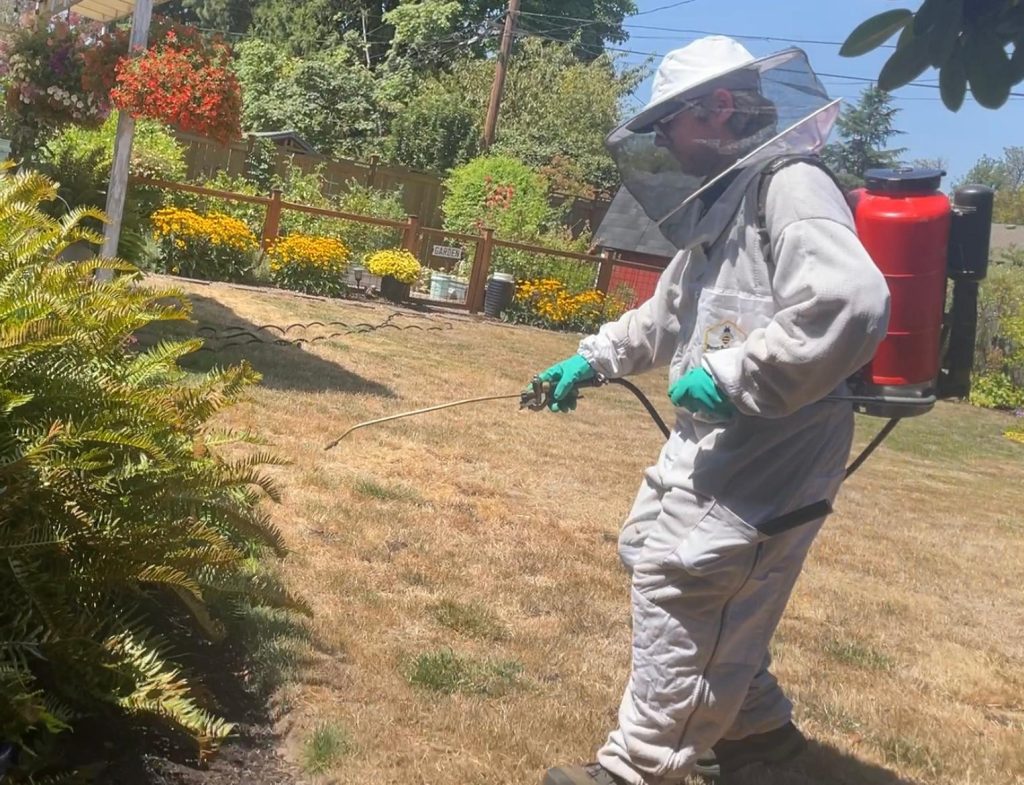
A Good Earth technician uses protective equipment and a targeted application to treat a yellowjacket nest.
Step Four: The Treatment
When treatment is necessary, it’s probably much more targeted than you’re imagining.
Instead of treating every square inch of your property, we focus on the places where pests actually live, travel, or enter the structure.
Depending on the situation, your technician may:
- Apply a targeted liquid treatment around the exterior foundation.
- Treat eaves and around exterior lights for spider and wasp control
- Place ant or cockroach baits where pests are actively feeding.
- Install rodent bait stations or traps.
- Remove spider webs and wasp nests.
- Treat cracks, crevices, or wall voids.
- Recommend repairs that prevent future infestations.
Every product is selected for a reason. More product doesn’t mean better results. In fact, one of the biggest misconceptions about pest control is that effectiveness comes from using more chemicals.
Usually, it’s the opposite.
Step Five: We Explain What We Did
Before we leave, we’ll go over everything.
We’ll explain:
- What we found.
- What we treated.
- Why we treated it.
- What you might see over the next few days.
- Anything you can do to help improve long-term results.
If we notice something outside the scope of your service—like a damaged crawlspace vent or tree branches touching the roof—we’ll let you know.
Our goal is to leave you with fewer surprises than when we arrived.
What Will I See After Treatment?
Depending on the pest, you may notice increased activity for a short time.
That doesn’t usually mean the treatment didn’t work. Think of pest control less like a light switch that suddenly makes the pest disappear, and more a dimmer switch. Real control takes time. Many insect treatments actually rely on the pests natural behavior to spread the active ingredient throughout the colony, making it more effective. Ants may continue to forage before the colony collapses. Spiders may continue wandering until they contact treated surfaces. Rodents may still be active while traps or bait stations do their job.
Every pest behaves differently, and your technician will explain what is normal for your situation.
What Can I Do to Help?
The best pest control programs are partnerships.
A few simple things go a long way:
- Trim vegetation away from your home.
- Store food in sealed containers.
- Fix plumbing leaks.
- Reduce clutter.
- Keep firewood away from the structure.
- Let us know when you notice new pest activity.
Small changes often make the biggest difference.
Do I Need to Leave My Home?
For most routine residential services, the answer is no.
Many exterior treatments require no disruption at all.
If we perform an interior treatment, your technician will explain any precautions, most interior treatments require a evacuation period (people and pets) of 4 hours. This gives the products time to dry and any droplets in the air to settle.
If a service requires something more involved—like a bed bug treatment or specialized application—we’ll tell you exactly what to expect before we ever begin.
No surprises.
Final Thoughts
Quality pest control shouldn’t feel mysterious.
You should know who is coming to your home, what they’re doing, why they’re doing it, and what results you can reasonably expect. At Good Earth Pest Company, we believe the best service starts with listening, continues with thoughtful inspection, and ends with a solution that’s tailored to your home—not copied from the last one we visited. If you’ve been wondering what pest service actually looks like, hopefully it seems a little less intimidating now.
We’re not just here to eliminate pests. We’re here to help you understand them, prevent them, and make your home a little more comfortable along the way.