
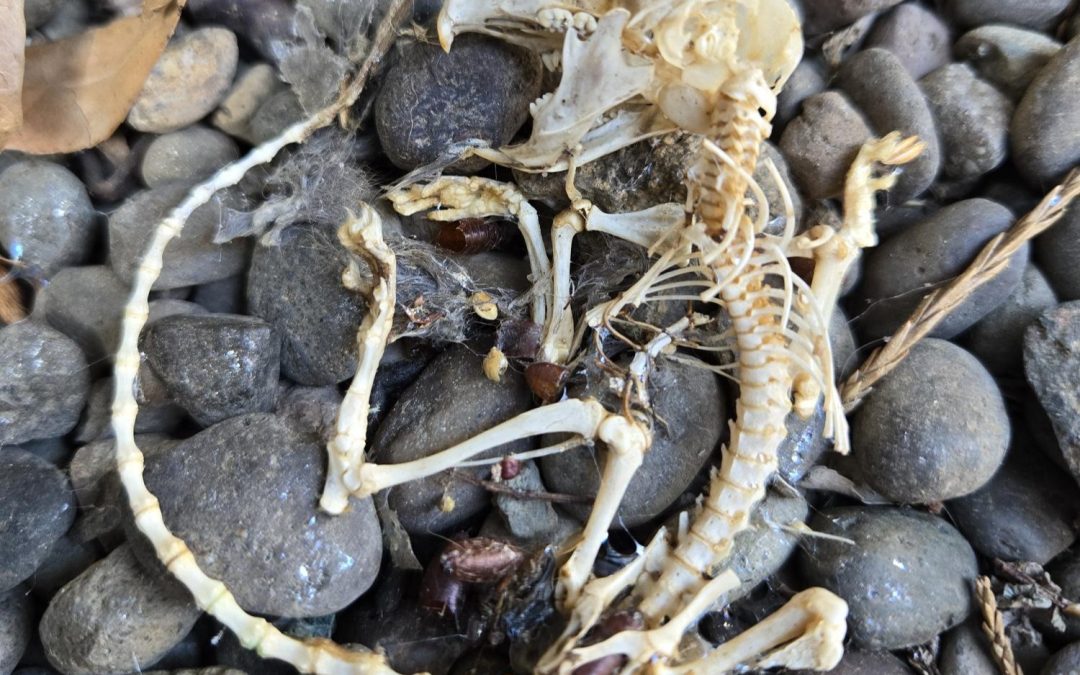
Finding mouse droppings in the garage is unsettling enough. Then, like any reasonable person in the twenty-first century, you make the mistake of Googling it. Five minutes later, you’ve convinced yourself that every dust bunny in the shed is harboring some exotic plague and that opening the door without a hazmat suit is a death sentence.
Take a breath.
Hantavirus is a real disease, and it deserves to be taken seriously. But for most people dealing with mice around their homes, the risk is much lower than the internet would have you believe. The trick is understanding which mice carry it, how it spreads, and when you actually need to be concerned.
Let’s take a look.
Key Takeaways
- Hantavirus is rare but potentially serious.
- In Oregon, hantavirus is primarily associated with deer mice, not house mice.
- People become infected by breathing in virus particles from rodent droppings, urine, or nesting material.
- The greatest risk comes from cleaning enclosed spaces like sheds, attics, garages, barns, and crawlspaces.
- Simple precautions can dramatically reduce your risk.
What Is Hantavirus?
Hantavirus pulmonary syndrome is a viral disease that affects the lungs. It was first recognized in the United States in 1993, and while cases remain uncommon, the illness can be severe.
The important thing to understand is that hantavirus isn’t spread by every mouse you encounter. In the western United States, the primary carrier is the deer mouse.
If you’ve spent much time in Oregon, you’ve probably seen one. They’re small and brown, with oversized eyes, large ears, and a white belly. Frankly, they look far too cute to be carrying anything dangerous.
Unfortunately, appearances can be deceiving.
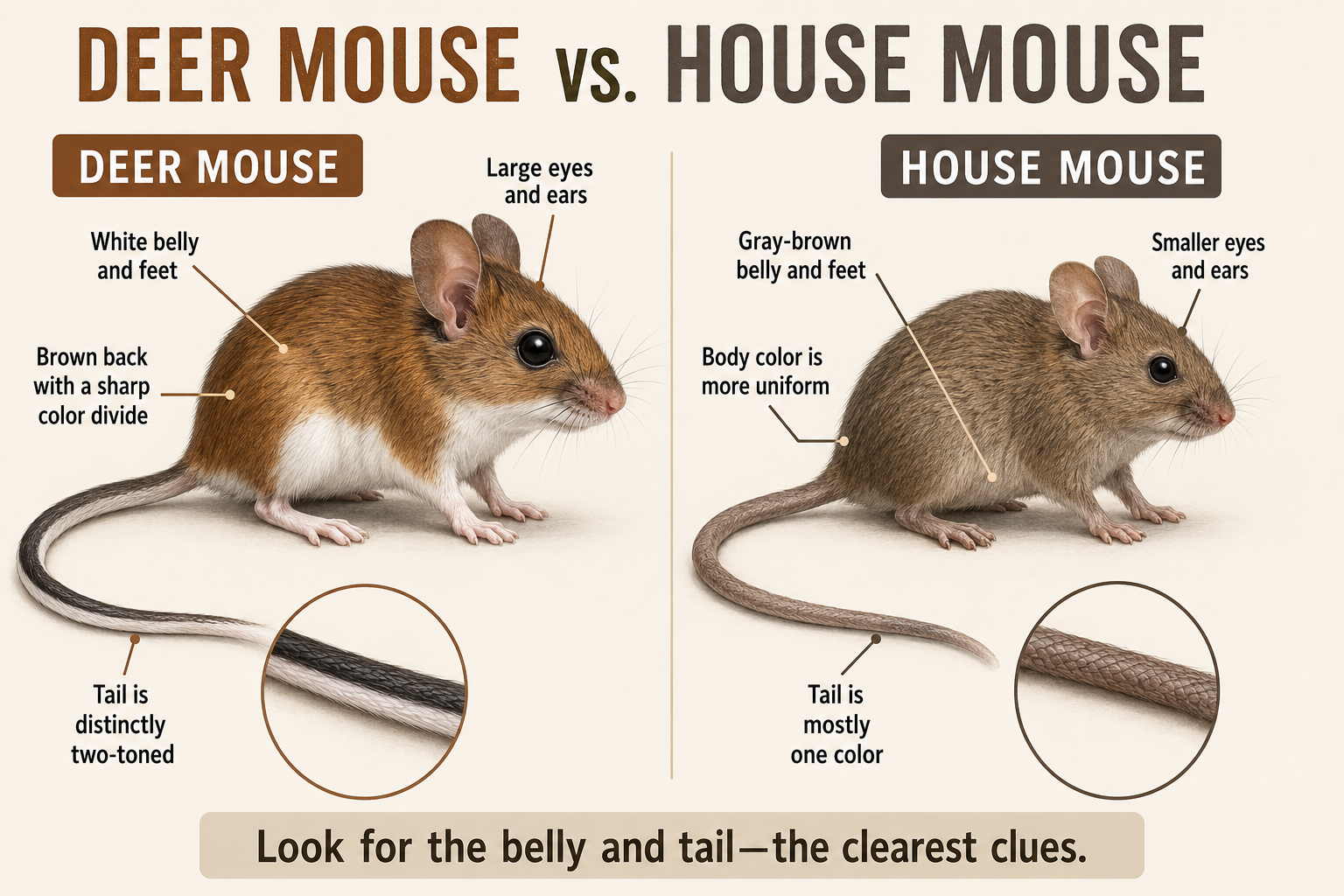
Deer mice typically have white bellies and sharply two-toned tails, while house mice are more uniformly gray-brown with mostly one-colored tails.
Which Mice Carry Hantavirus?
This is where things get a little reassuring.
The mouse most people think of—the gray house mouse that lives in kitchens, behind appliances, and in the occasional wall void—is not considered a major carrier of hantavirus.
The species that concerns public health officials is the deer mouse.
You’re more likely to encounter deer mice in:
- Sheds
- Barns
- Cabins
- Garages
- Crawlspaces
- Wood piles
- Outbuildings
- Rural and semi-rural properties
In other words, the risk increases as you move away from the city and closer to the kind of places where mice and tractors coexist peacefully.
How Do People Get Hantavirus?
Contrary to what many people assume, most infections don’t happen because someone was bitten by a mouse.
The virus is spread when tiny particles from infected mouse urine, saliva, or droppings become airborne and are inhaled.
The classic scenarios look something like this:
- Sweeping out a dusty shed that hasn’t been opened all winter.
- Cleaning an attic full of droppings.
- Opening a hunting cabin in the spring.
- Crawling under a house to investigate “that smell.”
- Vacuuming old nesting material.
Notice the pattern?
The danger isn’t usually the mouse itself—it’s stirring up contaminated dust.
How Common Is Hantavirus?
Here’s the good news: hantavirus is rare.
Every year, only a few dozen cases are reported across the entire United States. Most people who encounter deer mice will never contract the disease.
That said, “rare” doesn’t mean “impossible.” Because hantavirus can be serious, it’s worth taking precautions whenever you’re dealing with rodents or their droppings.
Think of it like wearing a seatbelt. Most drives end uneventfully, but the stakes are high enough that it’s worth the extra effort.
How Should I Clean Mouse Droppings?
If you’ve discovered droppings, resist the urge to grab the broom and go to war.
The Centers for Disease Control recommends:
- Open doors and windows and let the area air out for at least 30 minutes.
- Wear gloves.
- Spray droppings and nesting material with disinfectant or a bleach solution.
- Allow the solution to soak in for several minutes.
- Wipe up the material with paper towels.
- Place waste in a sealed bag and dispose of it properly.
- Wash your hands thoroughly afterward.
One thing you should not do is dry sweep or vacuum rodent droppings. That’s exactly how virus particles become airborne.
How Can I Reduce My Risk?
Fortunately, the same things that keep mice out of your home also reduce your risk of hantavirus.
Start with the basics:
- Seal gaps and holes around the exterior of your home. (Exclusion)
- Keep food and pet food in sealed containers.
- Remove clutter and harborage.
- Store firewood away from structures.
- Clean up fallen bird seed.
- Keep garages, sheds, and crawlspaces as dry and organized as possible.
- Address rodent activity early.
A mouse problem rarely gets better on its own.
When Should I Call a Professional?
If you’re finding droppings in your crawlspace, attic, garage, or other areas where cleanup could expose you to contaminated dust, it may be time to bring in a professional.
A good rodent program isn’t just about trapping mice. It’s about:
- Identifying the species.
- Finding entry points.
- Removing attractants.
- Excluding rodents from the structure.
- Cleaning and sanitizing contaminated areas.
Because, let’s be honest, nobody dreams of spending their Saturday afternoon crawling under the house with a respirator and a bottle of disinfectant.
Final Thoughts
The internet has a remarkable ability to convince us that every problem is either completely harmless or an impending apocalypse. Hantavirus falls somewhere in the middle.
Yes, it’s serious. Yes, it’s something to be aware of—especially here in Oregon, where deer mice are common.
But for the average homeowner, the risk remains low, particularly if you take a few simple precautions and address rodent problems early.
If you’ve discovered mice on your property and aren’t sure what you’re dealing with, give Good Earth Pest Company a call. We can help identify the culprit, reduce the risk, and get your home back to being a place where the only thing keeping you awake at night is your own questionable life choices.