
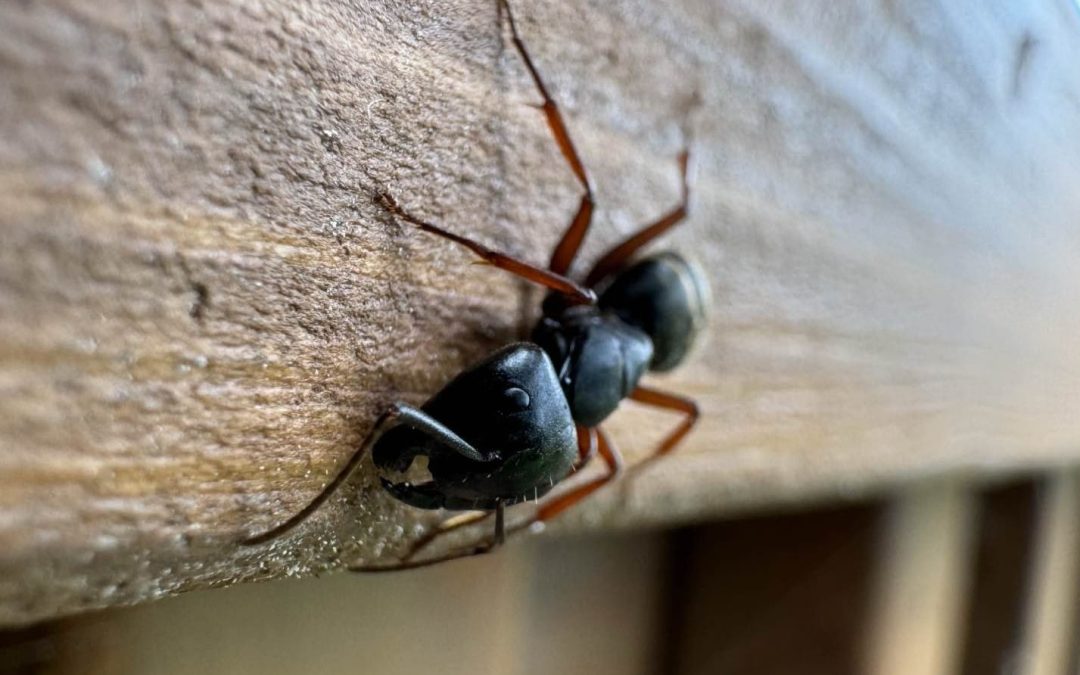
If you’ve discovered carpenter ants in your home, you’re probably wondering whether one treatment will be enough to get rid of them. After all, nobody wants to pay for a service only to find themselves dealing with the same problem a few months later.
The good news is that a single, properly timed carpenter ant treatment can eliminate an infestation inside your home. However, there’s an important difference between eliminating an existing infestation and preventing another one from developing in the future.
At Good Earth Pest Company, we offer both one-time carpenter ant treatments and ongoing preventative service. Understanding a little about how carpenter ant colonies operate, and why we treat them the way we do, can help you decide which approach makes the most sense for your home.
Key Takeaways
- One properly timed treatment can eliminate carpenter ant satellite nests inside a structure.
- In our area, primary carpenter ant nests are almost always located outdoors. The nests found inside homes are typically satellite nests.
- Good Earth guarantees elimination of structural carpenter ant nests, but not the outdoor primary colony.
- Carpenter ants are often most noticeable indoors during seasonal transitions, even though warmer weather provides better conditions for treatment.
- If carpenter ants disappear from your living spaces as the weather warms, that doesn’t necessarily mean they’re gone. Their return to outdoor foraging actually makes treatment more effective.
- A one-time treatment addresses the existing infestation, while Good Earth’s Standard Insect Program provides ongoing preventative service to help reduce the likelihood of reinfestation.
Understanding Carpenter Ant Colonies
Carpenter ants are social insects that establish colonies containing a queen, workers, and developing young. Unlike termites, they don’t eat wood. Instead, they excavate galleries within wood and other suitable materials to create nesting spaces. They often prefer moisture-damaged wood, although they can also establish nests in sound, dry wood and insulation.
One of the things that makes carpenter ants challenging to control is that a single colony can occupy multiple nesting locations. These are generally divided into primary nests and satellite nests, each serving a different purpose within the colony.
The primary nest is where the queen typically resides, along with eggs and younger developing ants. Because these younger stages require relatively high humidity, primary nests are usually associated with moist environments. Here in Oregon, they’re commonly found outdoors in trees, stumps, logs, and other protected locations.
As a colony grows, it may establish satellite nests containing workers and older developing ants. These nests don’t require the same moisture conditions as the primary nest, allowing them to occupy relatively dry environments. Unfortunately, that includes wall voids, attic insulation, and other spaces within homes.
In our experience, carpenter ant infestations inside homes are almost always associated with satellite nests. The primary nest, including the queen, is generally located somewhere outside the structure. Workers travel between these locations, transporting food and maintaining the colony.
This distinction is important because eliminating the ants nesting inside your home doesn’t necessarily require eliminating the entire outdoor colony.
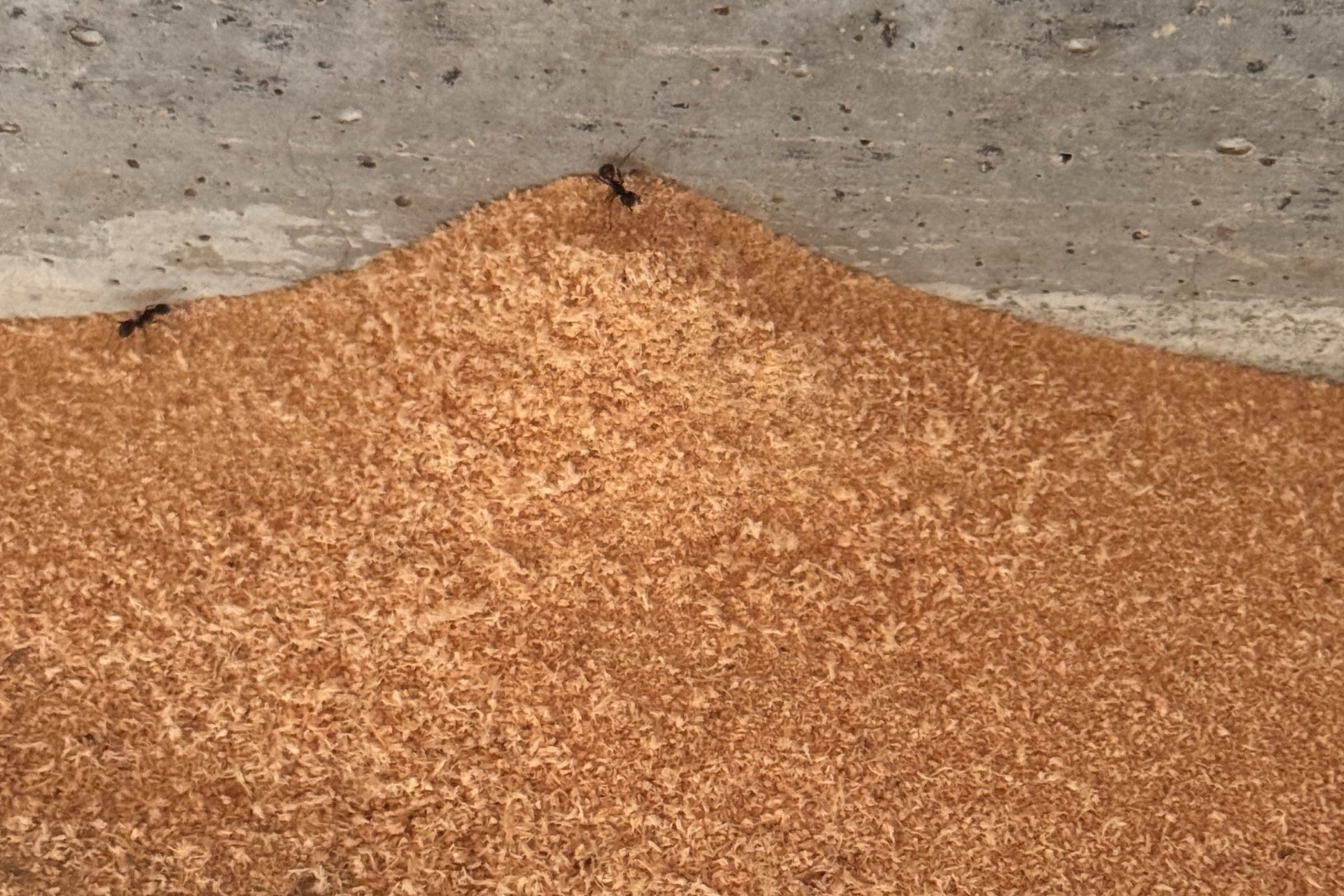
Visible ants are only part of the picture. Frass provides another clue when assessing carpenter ant activity.
Can One Treatment Eliminate Carpenter Ants Inside My Home?
Yes. In many cases, a single properly performed treatment can eliminate the carpenter ant satellite nests established within a structure. At Good Earth, this is the objective of our one-time carpenter ant treatments, and we guarantee elimination of those structural nests.
We commonly use non-repellent insecticides that allow ants to travel across treated surfaces without necessarily detecting the product. Depending on the insecticide and exposure conditions, ants may also transfer residues to other colony members through their normal activities. This can extend the effects of a treatment beyond the individual ants that initially encounter it.
However, carpenter ant colonies have a complex social structure, with different groups of ants performing different functions. The queen generally remains protected within the outdoor primary nest, and there is no guarantee that insecticide residues encountered by foraging workers will eventually reach her in sufficient quantities to eliminate the colony.
For this reason, we don’t guarantee elimination of the entire outdoor colony. Fortunately, that’s not necessary to resolve the infestation inside your home. Our goal is to eliminate the satellite nests occupying the structure, even if the primary colony continues to exist outdoors.
There is one important limitation to a one-time treatment, though. While it can eliminate the existing infestation, it doesn’t prevent carpenter ants from establishing new satellite nests in the future. The surviving outdoor colony, or another colony nearby, may eventually discover suitable nesting locations within the home again.
This doesn’t mean the original treatment failed. It means a new infestation has developed after the previous one was eliminated.
Why Do Carpenter Ants Seem to Appear and Disappear?
One of the more confusing aspects of carpenter ant infestations is that homeowners often notice them during the colder parts of the year, even though carpenter ants are generally most active outdoors during warmer weather.
In our experience, carpenter ants nesting inside homes are most likely to become noticeable during seasonal transitions. During late winter and early spring, heated homes can disrupt the ants’ normal seasonal timing. Warm indoor temperatures may stimulate activity within a satellite nest before outdoor conditions are suitable for normal foraging. As a result, homeowners sometimes discover carpenter ants wandering through their living spaces while it’s still quite cold outside.
We also see this happen during sudden cold snaps in the fall. Abrupt changes in outdoor temperatures can affect the activity of ants occupying structural satellite nests, sometimes resulting in workers appearing inside the home.
Another common way homeowners discover carpenter ants is when they swarm. Mature colonies produce winged reproductive ants that eventually leave their nests to mate and establish new colonies. When winged carpenter ants emerge inside a home, it can indicate that an established nesting site is present somewhere within the structure.
Interestingly, homeowners may see very little carpenter ant activity during the summer, even when satellite nests remain inside their homes. As outdoor temperatures become favorable, the ants resume normal foraging activity outside the structure. They may travel between outdoor food sources and concealed nesting locations without ever entering the home’s living spaces.
This seasonal behavior is one reason carpenter ant infestations can go unnoticed for extended periods. Just because you aren’t seeing ants doesn’t mean they aren’t still nesting inside the structure.
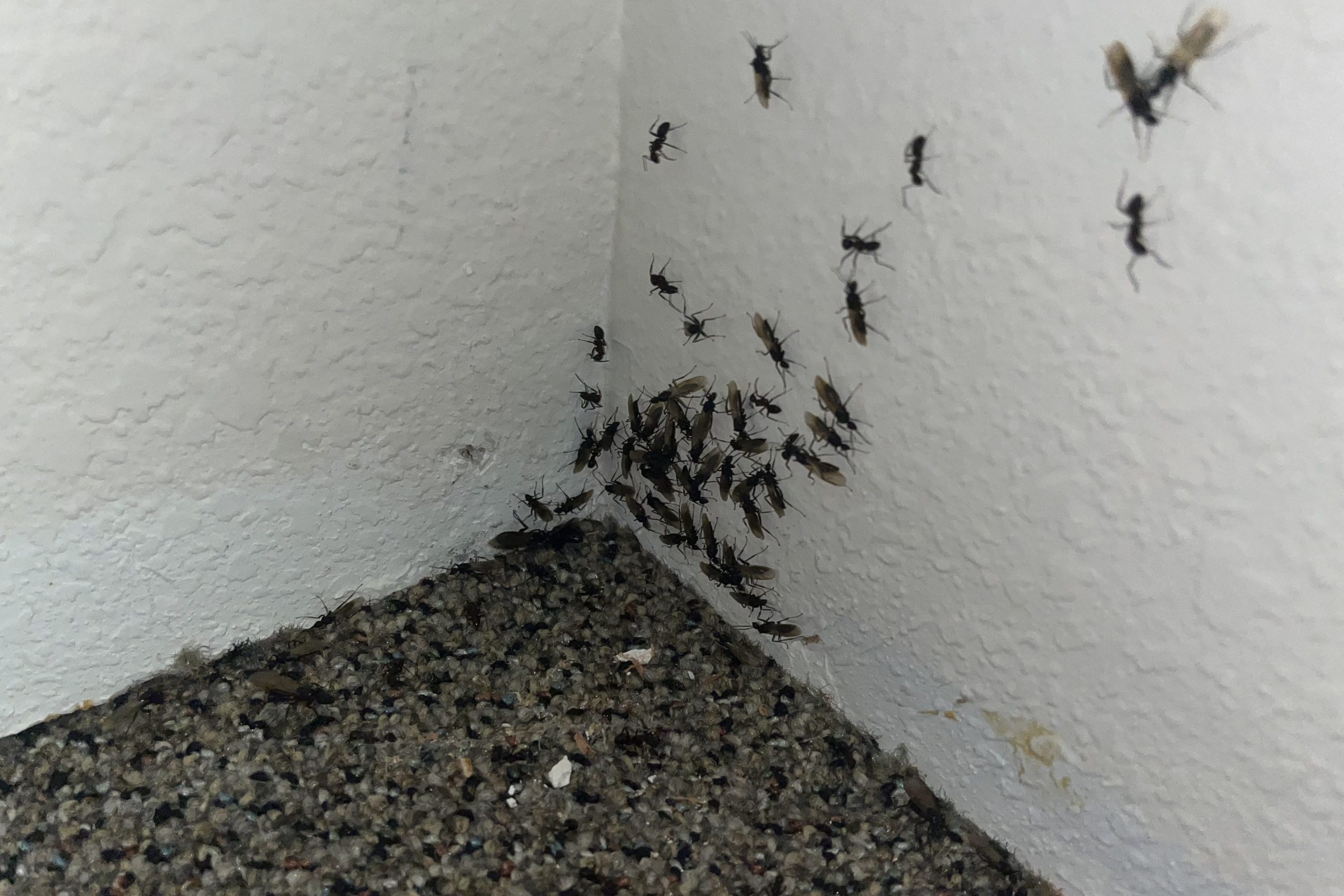
An indoor swarm gets your attention. Where and when it appears can help guide the inspection.
Why Are Carpenter Ant Treatments Seasonal?
Carpenter ant treatments depend heavily on the activity of the ants themselves. At Good Earth, we commonly use non-repellent insecticides that ants encounter as they travel between nesting and foraging locations. For these treatments to work effectively, the ants need to be moving through treated areas.
During colder weather, carpenter ant activity can decrease significantly. Even when satellite nests remain inside a heated structure, ants may not be traveling between their nesting locations and outdoor foraging areas. Without that movement, we have fewer opportunities to expose them to the treatment.
For this reason, Good Earth performs carpenter ant treatments during the warmer months when ants are actively moving and foraging. We can still inspect for evidence of carpenter ants during colder weather, evaluate potential nesting locations, identify moisture problems, and develop a treatment plan. However, the actual treatment generally needs to wait until seasonal activity resumes.
This can seem counterintuitive to homeowners who first noticed ants during winter or early spring, especially if those ants have disappeared by the time treatment conditions improve.
The Carpenter Ants Disappeared. Should I Cancel My Treatment?
This is a situation we encounter fairly regularly. A homeowner discovers carpenter ants wandering around the house during late winter, schedules a treatment, and then calls to cancel when the ants disappear as the weather warms.
It’s an understandable assumption. If the ants are gone, why spend money treating them?
The problem is that the ants probably haven’t gone anywhere. They’ve simply returned to normal outdoor foraging activity. The satellite nests may still be present inside the walls, insulation, or other structural spaces, but the workers no longer have a reason to wander through the living areas of the home.
In fact, this is exactly the behavior we want to see when it’s time for treatment. When carpenter ants are actively traveling between outdoor foraging areas and their nesting locations, they’re more likely to encounter properly placed insecticides. This provides a much better opportunity to control the structural infestation than attempting treatment during periods of limited activity.
If you’ve scheduled a carpenter ant treatment and the ants disappear as the weather warms, don’t assume the problem has resolved itself. Their disappearance from your living spaces may actually indicate that conditions are becoming ideal for treatment.
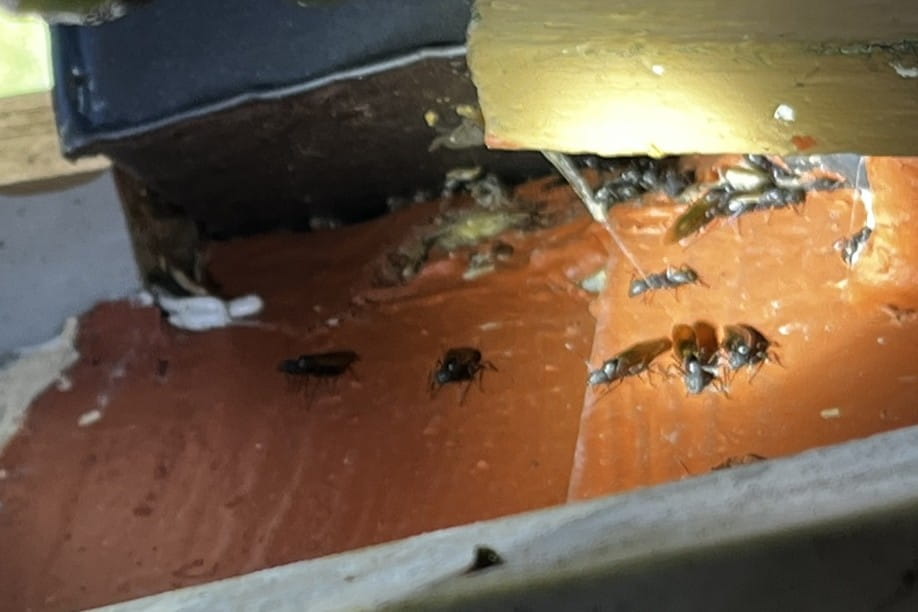
A closer look beneath the trim reveals activity that might otherwise go unnoticed.
If the Main Colony Survives, Won’t Carpenter Ants Come Back?
They can, although reinfestation isn’t inevitable. Eliminating satellite nests inside a home doesn’t eliminate the surrounding carpenter ant population, and outdoor colonies may remain active for years.
Whether carpenter ants establish another satellite nest depends on several factors, including the availability of suitable nesting locations, access to the structure, moisture conditions, and the presence of nearby colonies. Some homeowners have a one-time carpenter ant treatment and never experience another problem, while others live in environments where recurring infestations are more likely.
This is the primary distinction between a one-time carpenter ant treatment and an ongoing preventative pest management program. A one-time treatment is designed to eliminate the infestation that’s already present. An ongoing program is intended to reduce the likelihood of another infestation developing and provide continued service if carpenter ants return.
Neither approach is necessarily right for every homeowner. The appropriate choice depends on the property, the surrounding environment, and the homeowner’s preference for ongoing preventative service.
How Does Good Earth’s Standard Insect Program Help?
Carpenter ants are included in Good Earth’s Standard Insect Program, which provides four scheduled service visits annually. Rather than waiting for another infestation to become noticeable, the program incorporates regular inspections, monitoring, and preventative treatments when appropriate.
Because carpenter ants are seasonal, treatments specifically targeting them are performed during the warmer months when they’re active. These exterior treatments are intended to intercept ants as they move around the structure, reducing the likelihood that they’ll establish new satellite nests inside the home.
Regular visits also provide opportunities to identify conditions that may contribute to future infestations. Moisture problems, vegetation contacting the structure, and accessible entry points can all make a home more vulnerable to carpenter ants. Addressing these conditions is an important part of our approach to Integrated Pest Management.
Another benefit of the Standard Insect Program is that additional treatments for covered pest problems are included between regular visits at no extra charge. If carpenter ants become a problem again, homeowners can contact us rather than having to arrange and pay for another separate treatment.
Of course, no preventative program can guarantee that carpenter ants will never enter a home or attempt to establish another nest. What ongoing service provides is a more proactive approach to managing that risk, along with continued support when problems arise.
For some homes, particularly those surrounded by wooded areas or with a history of carpenter ant activity, that ongoing protection can be worthwhile. For others, a one-time treatment may be entirely sufficient.
What Else Can Homeowners Do to Prevent Carpenter Ants?
Pesticide treatments are only one part of effective carpenter ant management. Reducing favorable nesting conditions can also help make a home less attractive or accessible to carpenter ants.
Moisture management is particularly important. Repairing roof leaks, plumbing leaks, and drainage problems can help prevent wood from becoming suitable for nesting. Severely moisture-damaged wood should be repaired or replaced when appropriate, and unnecessary wood debris or decaying stumps near the foundation should be removed.
It’s also helpful to keep vegetation from contacting the structure and seal accessible gaps around utility penetrations and other potential entry points. Although these measures won’t guarantee that carpenter ants never return, they can reduce conditions that favor structural nesting.
Combining these efforts with appropriate monitoring and preventative treatments provides a more comprehensive approach to long-term carpenter ant management.
Summary: One Treatment Can Work, but It Doesn’t Prevent Future Infestations
A single, properly timed carpenter ant treatment can eliminate satellite nests inside your home, even if the primary colony survives outdoors. Because the queen generally remains protected within the outdoor primary nest, we can’t guarantee elimination of the entire colony, but doing so isn’t necessary to resolve the structural infestation.
The important distinction is that eliminating an existing infestation doesn’t prevent carpenter ants from establishing new nests later. A one-time treatment addresses the problem you have now, while ongoing preventative service is designed to reduce the likelihood of future problems.
Treatment timing also matters. Carpenter ants are often most noticeable inside living spaces during seasonal transitions, but the warmer months provide the activity necessary for effective treatment. If the ants disappear from your living spaces as the weather warms, that doesn’t necessarily mean the infestation has resolved itself. It may simply mean the ants have resumed normal outdoor foraging, which is exactly what we want when it’s time to treat.
At Good Earth Pest Company, we offer both one-time carpenter ant treatments and ongoing protection through our Standard Insect Program. Our goal is to help homeowners understand their options and choose the approach that makes the most sense for their property.
If you’re finding carpenter ants inside your home, contact Good Earth. We can evaluate the activity, recommend an appropriate treatment, and help you decide whether a one-time service or ongoing preventative program is the better fit.

Adam Hiddleson is an Associated Certified Entomologist (ACE)
and Technical Director for Good Earth Pest Company.
With approximately 15 years of experience in pest management,
Adam focuses on practical, science-based pest control solutions
and educating homeowners about the pests they encounter.
Sources and Further Reading
Scientific and Educational Resources
– Oregon State University — Carpenter Ants
Carpenter ant biology, nesting behavior, and treatment strategies.
– UC Integrated Pest Management — Carpenter Ants
Colony structure, satellite nests, and prevention.
Related Good Earth Articles
– How Do You Know You Have Carpenter Ants? 8 Key Signs to Look Out For
Recognizing evidence of carpenter ant activity inside a home.
– Should I Be Worried About Carpenter Ants Around My Home?
Understanding when carpenter ants become a structural concern.