
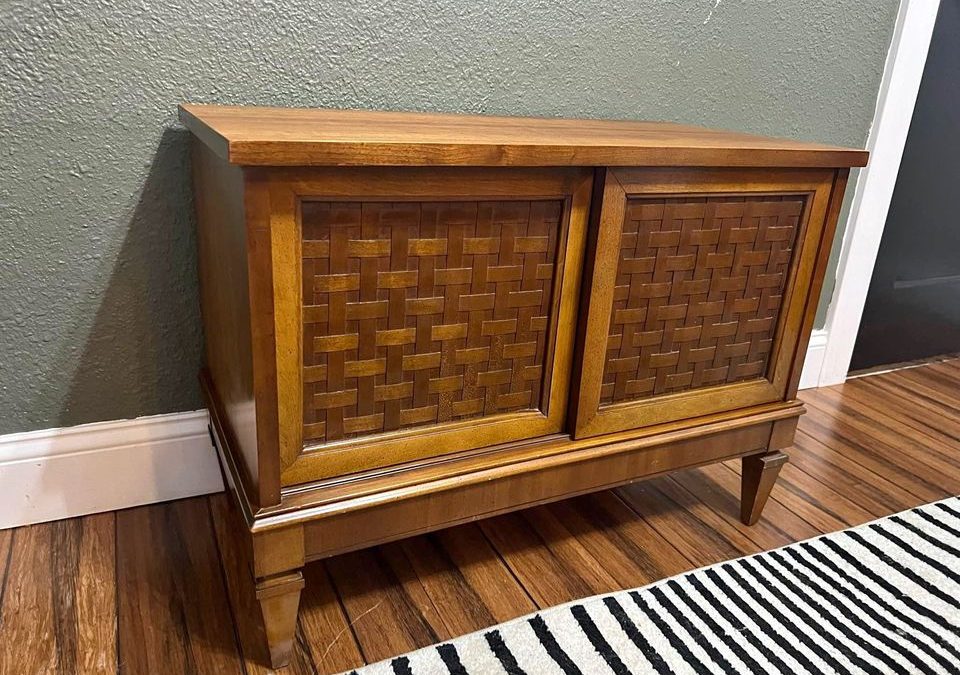
Everyone desires comfort in their space, whether it’s at home or in the workplace. Retro, Mid-century modern, Cottage core, BoHo, Farmhouse, Atomic, and Dark academia—everyone has a vibe they strive to achieve, from the nostalgic co-dependent Maximalist to the pragmatic anal-retentive minimalist. Nailing down that vibe can be challenging and sometimes costly.
So, what do you do when you don’t have a colossal furniture budget but want unique, quality furniture? Most people turn to the used, vintage market. Furniture from the 50s through the 70s has been in high demand with Millennials and Gen Zers, creating a burgeoning secondary market. All you have to do is find a piece that has already survived decades of use, shine it up a bit, and there you have it—a table that will easily last another 60 years!
Now, you might be asking yourself, “Isn’t this a pest control blog? Why are we talking about furniture?” Well, let me shed some light. I am the Technical Director here at Good Earth Pest Company, But wait, there’s more – on the side I’m also a vintage furniture aficionado, scouring for hidden gems on the weekends, then refinishing and reselling them. So when it comes to buying used furniture, I bring a unique perspective to the table (see what I did there.)
Picture your beloved new-to-you Eames lounge chair – not just a piece of furniture, but a slice of history. But what if there’s something lurking beneath the surface? There may be more than pocket change wedged down in those cushions.
In this blog, we’re diving into the unsettling reality of bed bugs in the used furniture market! But first, let’s take a look at the bedbug itself and its relationship with us.
Bedbugs, scientifically known as Cimex lectularius, are small, wingless insects that have coexisted with humans for thousands of years. These nocturnal parasites feed exclusively on the blood of mammals, with humans being their preferred hosts. While bedbugs are not known to transmit diseases directly, their bites can cause itching, discomfort, and, in some cases, allergic reactions. Historically, bedbugs were widespread pests, commonly found in human dwellings such as houses, apartments, hotels, and even public transportation. With the advent of DDT in the late 19th century, bedbugs became all but eradicated across the Americas, but with environmental and health concerns, DDT was banned in the 1970s. Since then, bedbugs have been making a comeback. Factors such as increased international travel, changes in pest control practices, and resistance to insecticides have contributed to the resurgence of bedbugs.

Furthermore, social stigma and misconceptions about bedbugs have led to fear and anxiety among affected individuals, making it challenging to address infestations effectively. Their ability to translocate on luggage, clothing, and furniture allows them to spread rapidly from one location to another, making them difficult to control. Bedbugs are skilled at hiding in cracks, crevices, and other hiding spots during the day, emerging at night to feed on their unsuspecting hosts while they sleep. This behavior has earned them the reputation of being elusive and notoriously difficult to eradicate.
Remember, anything used could be suspect. It’s not just thrift shops but estate sales, garage sales, Craigslist, and Marketplace buys. Even your antique shop or vintage boutique could be a source of infestation.
Just to be clear, I’m not saying that there are bedbugs everywhere and you shouldn’t recycle or upcycle used furniture. On the contrary, as a reseller, I love used furniture dearly.
But I’ve been fortunate and never ran into bedbugs on any of my purchases, which have been many. On the other hand, as a pest control professional, I’ve been in many situations where it has been advised that a furniture item be discarded. We don’t discard it for them, but we always advise that they not donate it to charity. However, the landfill costs money, and people are people, so you do the math. That loveseat may end up at a cousin’s house instead of the garbage.
Luckily, I’m here to help and so I put together some simple guidelines to help ensure all your thrifty purchases are more likely to be bug-free:
Know your enemy
You would be surprised how many people don’t know what a bedbug looks like. Better safe than sorry; Google yourself some bedbug pictures and get educated.
Bedbugs aren’t always on the bed
Although bedbugs are often found in seams of the mattress and cracks and crevices of the bedframe, they are just as likely to be harboring in the nightstands or other furniture adjacent to the bed. Furthermore, if the person sleeping in the bed frequents a favorite recliner or couch, they can easily spread to that piece of furniture.
Inspection, Inspection, Inspection!
It’s best practice to assume all furniture is potentially infested, so inspect every piece of furniture as if that were the case. Due to their flattened body structure, bedbugs like to wedge themselves into seams and folds of upholstery and the cracks and crevices of solid materials. Be sure to check screw holes and hollow cavities in legs or casters. They will often be found in congregations of eggs, adults, and all levels of adolescents (instars). These areas will also be marked with black marks (spotting) from their feces. Be thorough; adult bedbugs will also harbor singly, apart from the main cluster. Always bring a flashlight with you when furniture shopping.
Bedbugs play the long game
Just because a piece of furniture has been sitting in a shop for a couple of months doesn’t mean that the bedbugs have starved to death and it’s safe to bring home. There have been cases of bedbug populations at summer camps overwintering in the cabins and re-emerging the next season when the campers arrive, extremely hungry. Bedbugs in laboratory setting have gone almost a year without feeding!
They can’t take the heat
Inspecting solid wood furniture and plastic goods is one thing, but what happens when you have a crushed velvet tufted sofa? Any sofa for that matter. When you get to inspecting them, the amount of cracks and crevices seems endless! Here’s where the heat comes into play. Adult bedbugs die at around 120 F, and their eggs kick off at about 125 F, so pillows and cushions can be placed in the dryer in a high-temperature setting. As for the rest of the sofa, use a portable hot steam cleaner to steam all the seams and folds of the couch. Work slowly, ensuring that the surface underneath gets up to an adequate temperature. Using this method, you can make sure that any eggs or bugs that you missed in your inspection have even less of a chance of spreading.
Finally, leave the chemicals to the Pros
In this humble pest professional’s opinion, once a piece of furniture has bugs on it, it’s a lost cause. Most things can be replaced, but there are instances where an item may have so much value, be it monetary or sentimental, that professional treatment is warranted. If you suspect you have a bed bug infestation, give your local pest control company (like Good Earth) a call. Getting an inspection and consultation is usually free (it is with us), and they can help set you on the right path.
So, have fun with it! Furnish your home with whatever makes you happy. Just follow these helpful tips and be vigilant. Everything will probably be fine! Just remember if you accidentally bring home some unwanted house guests with your Allermuir Open Moder Lounge Chair, Good Earth has your back. We’re always here to help!
Adam Hiddelson