
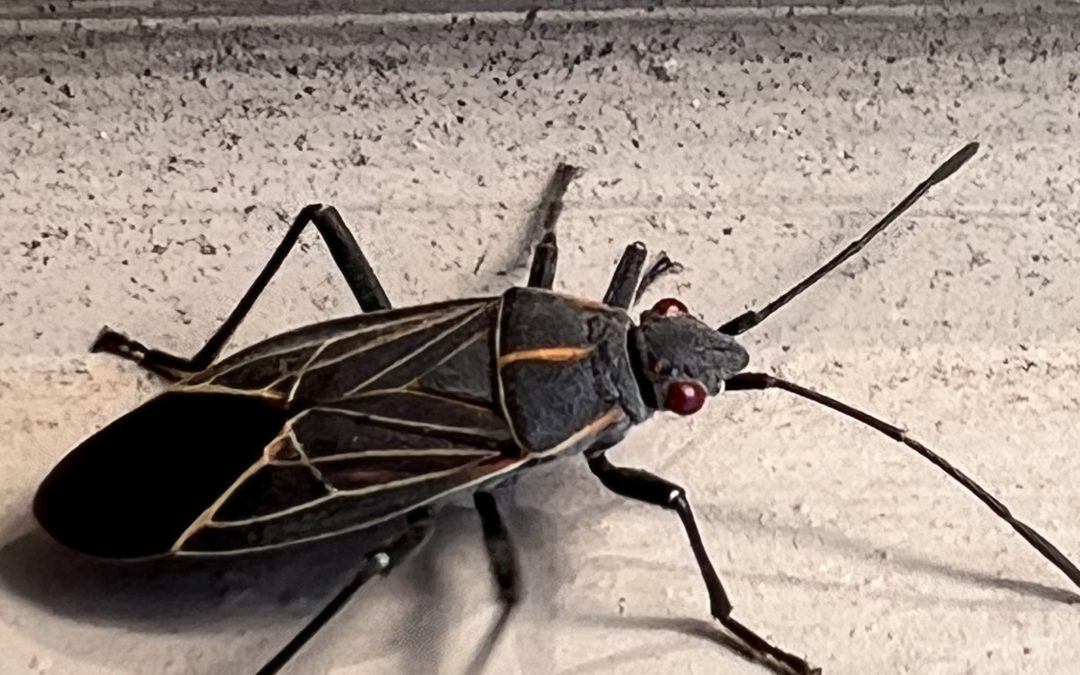
Hey, do you like riddles? Try this one out, I bet you don’t get it. What’s white and black and red all over? Give up? The answer is Berta Dalloger’s two-story, white, Dutch colonial down on the corner of 27th and Cornsmut, that’s what! (Technically the color is “Swiss coffee” but that’s just another name for white.) The reason it’s black and red all over is that Berta’s got bugs, Box Elder Bugs.
Let’s pump the brakes for a second. I’m not trying to put Berta on blast. Come the fall here in the Willamette Valley and much of Oregon in general there are thousands of homes plagued by the same affliction as our poor fictional Berta. As temperatures drop, these pesky flyers are drawn to the sun-warmed exterior of your home like a moth to a flame. Once there they un-intentionally creep out and harass the inhabitants. “What can we do about this menace?” you ask. We’ll get to that soon, but first, let us learn a little about the box elder bug.
The Box Elder Bug: A Closer Look
The box elder bug, scientifically known as Boisea trivittata, is a member of the true bug family Rhopalidae. One of its most striking features is its vibrant coloration, featuring a dark, elongated body adorned with vivid red markings. These bold colors serve as a warning to potential predators, signaling that the box elder bug is not to be trifled with.
Box elder bugs are primarily herbivores, with a particular affinity for the seeds of box elder trees (Acer negundo), although they may also feed on other maple species. During the summer months, these insects can be found feasting on the seeds, twigs, and leaves of their preferred host trees. Interestingly, box elder bugs have specialized mouthparts designed for piercing and sucking, allowing them to extract sap and juices from plants.
The Life-Cycle of Box Elder Bugs:
The life-cycle of box elder bugs is a remarkable journey through various stages, from egg to nymph to adulthood. It typically starts in late spring or early summer when adult box elder bugs lay their tiny, barrel-shaped eggs on the leaves, bark, or crevices of their host trees. These eggs are a striking red color and are often laid in clusters.
Once the eggs hatch, the nymphs emerge. At this stage, they are mostly red and lack the wings of the adults. Nymphs go through several molts, shedding their exoskeleton as they grow. As they mature, they develop the characteristic red and black coloration that makes adult box elder bugs so distinctive.
With the arrival of fall and cooler temperatures, box elder bugs begin to seek shelter for the winter. They are known for congregating on the sunny sides of buildings, where they enter small cracks and crevices to overwinter. During this time, they enter a state of semi-dormancy, emerging when temperatures warm up in the spring to resume their feeding and reproductive activities.
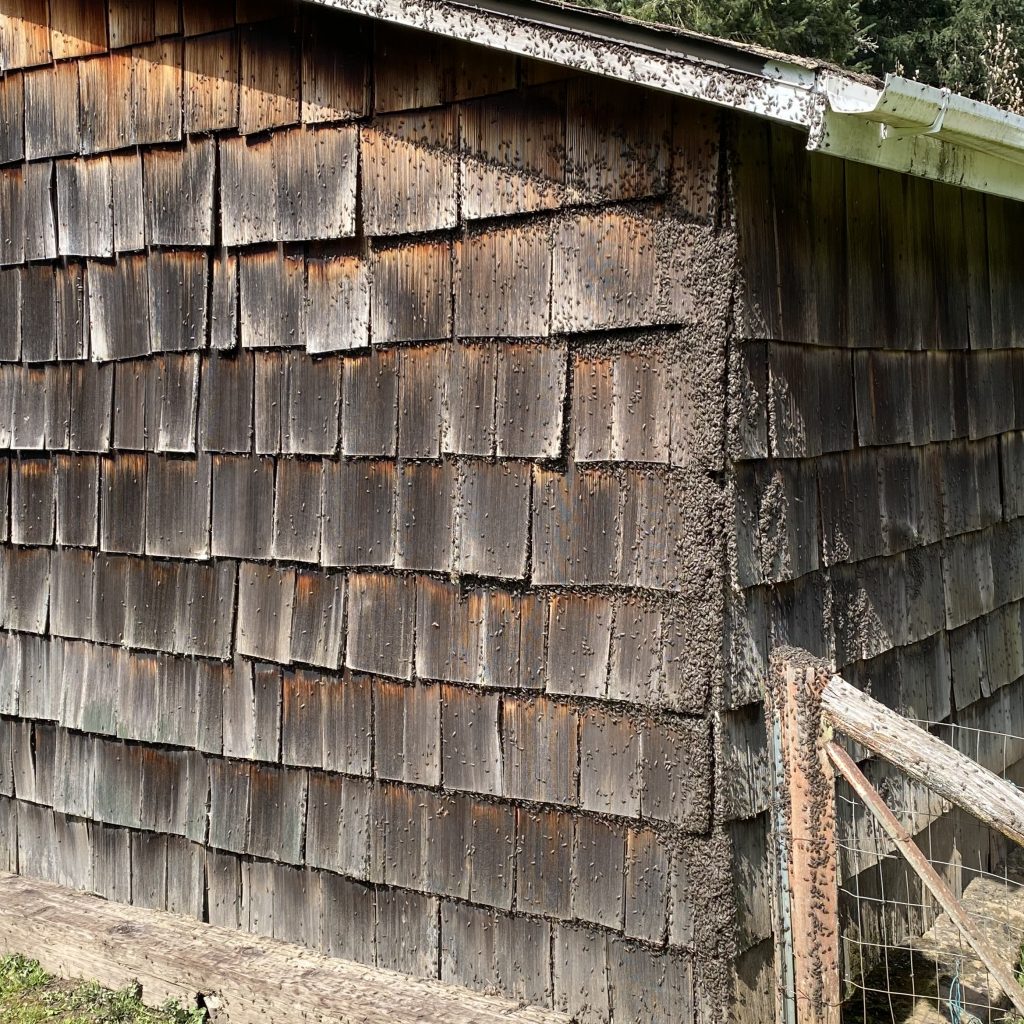
Box Elder Bugs congregating on the exterior of a home.
At this point, I can imagine you’re thinking “Really neat, but I have box elder bugs and I need to get rid of them, so please spare me the recipe blog intro!” Okay! I hear you, I put together a list of helpful hints for managing your box elders this season, and if you’ve made it this far you earned it.
-
Sealing Entry Points
One of the most effective strategies to prevent box elder bugs from entering your home is to seal all potential entry points. Inspect doors, windows, and cracks in the foundation for any gaps and crevices. Use caulk or weather-stripping to seal these openings and deny the bugs access to your living spaces.
-
Cleanliness
Maintaining a clean and clutter-free environment outside your home can make it less appealing to box elder bugs. Remove debris, leaf litter, and organic matter near your house, as these can serve as hiding spots.
-
Prune and Trim
Regularly prune and trim trees and shrubs around your home. This not only limits the availability of food sources for box elder bugs but also removes potential hiding spots and entry points.
-
Remove Host Trees
This one is a bit extreme but since box elder bugs primarily feed on box elder trees, consider removing these and any other obviously infested trees from your property if they are not of significant value to your landscape. This can significantly reduce the presence of box elder bugs in the vicinity. But if you can, we prefer that you leave as many trees as possible.
-
Vacuuming
If box elder bugs have already infiltrated your home, using a vacuum cleaner with a hose attachment can be an effective means of removal. Be sure to empty the vacuum bag or canister promptly to prevent them from escaping.
-
Soap and Water
One way to reduce the number of Box Elder Bugs on the exterior of your home is to spray the bugs with a simple solution of soap and water. All you need to do is mix 1-2 tablespoons of liquid dish soap to a spray bottle full of water, shake gently, and then spray the mixture directly on the bugs and where they are congregating. This will kill any bugs that are directly exposed to the soap but make sure to where eye protection when doing this!
-
Consult Local Experts
Consider reaching out to local agricultural extension services or entomologists for advice specific to your region. They can provide insights into the behavior and control strategies tailored to your area.
-
Professional Pest Control
If you’re dealing with a persistent infestation, it’s advisable to consult with a professional pest control service. Our pest technicians here at Good Earth Pest Company have the expertise and access to specialized treatments that can effectively manage box elder bug populations.
Remember that controlling box elder bugs may require a combination of these strategies and persistence. It’s essential to strike a balance between managing their presence and minimizing the environmental impact of control methods. Here at Good Earth, we believe in effective, responsible pest control with an eye on the environment and pollinator safety.
So, if it all just becomes “too much” give us a call and one of our friendly technicians will come out and assess the situation, create a control strategy, and if you so decide, perform a treatment. No pressure. We just want you to have a stress-free Autumn. Because Christmas [breaks pencil].
Furiously raking leaves. Every. Single. Day.
Adam Hiddleson