
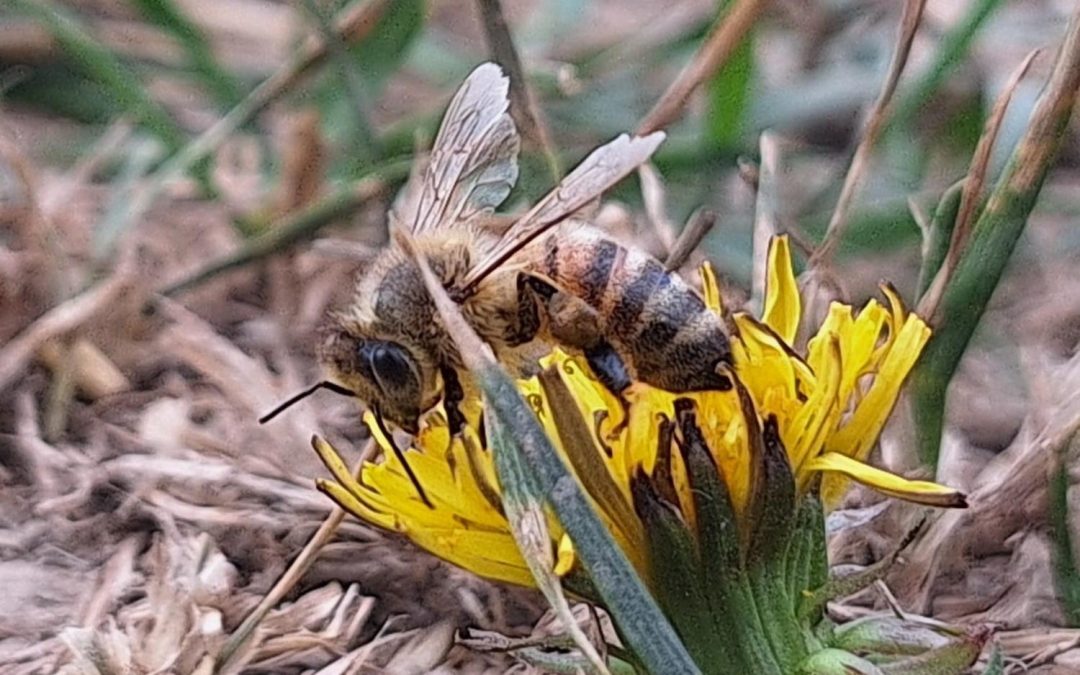
There’s a certain charm to watching bees work their way through the flowers in your garden. They’re fascinating little animals, important pollinators, and generally pretty good neighbors. That relationship can get a little strained, however, when you discover a few thousand of them have decided to move into the wall next to your bedroom.
Or maybe you’ve noticed a steady stream of fuzzy bumble bees disappearing into a hole beneath your garden shed. You weren’t planning on becoming a beekeeper, and now you’re wondering whether you can still mow the lawn without getting into an argument with the local pollinators.
We get calls about honey bees and bumble bees fairly regularly at Good Earth Pest Company. Although we don’t provide treatments for either, we’re happy to help people understand their options. Those options can be quite different depending on which bee you’re dealing with, where the nest is located, and whether it actually needs to be removed.
Key Takeaways
- Honey bees and bumble bees have very different nesting habits, colony sizes, and life cycles.
- Neither species is generally interested in attacking people, although both can defend their nests.
- A honey bee swarm is different from an established colony and may be relatively easy for an experienced beekeeper to collect.
- Bumble bee colonies are generally seasonal, and leaving an undisturbed nest alone is often the simplest solution.
- Honey bee colonies inside walls require special consideration because the wax comb, honey, and other hive materials can create problems if left behind.
- Good Earth doesn’t treat honey bee or bumble bee colonies, but we can offer guidance and help you understand what kind of specialist to contact.
First, Are They Honey Bees or Bumble Bees?
Before deciding what to do, we need to figure out what we’re looking at. Honey bees and bumble bees are both social bees, meaning they live in colonies, but that’s about where their similarities as household pests begin to diverge.
Honey bees are generally smaller and less fuzzy-looking than bumble bees. They have amber-brown bodies with darker bands and tend to move in fairly organized traffic around their nest entrances. A healthy, established honey bee colony can contain tens of thousands of workers, and because the colony can survive through winter, it may occupy the same nesting location for years.
Bumble bees, on the other hand, are typically larger, rounder, and considerably fuzzier. They often have bold black and yellow coloration, although patterns vary by species. Their colonies are much smaller than honey bee colonies, often numbering dozens to a few hundred individuals, and they generally last only a single season.
That last difference is particularly important when we’re deciding what to do about a nest.
Honey Bees: Swarm or Established Colony?
One of the more alarming things a homeowner can discover is a large ball of honey bees hanging from a tree branch, fence, or the side of a house. It looks like something out of a nature documentary, and your first instinct might be to keep everyone indoors until somebody arrives with a flamethrower.

If your honeybee removal plan involves a flamethrower, it’s time for a different plan.
Please don’t use a flamethrower.
What you’re probably seeing is a honey bee swarm. Swarming is how honey bee colonies reproduce. A queen leaves an established colony with a large group of workers, and the bees temporarily gather somewhere while scouts search for a suitable permanent home. During this process, the bees generally aren’t defending a nest full of brood and stored honey, so they’re often less defensive than an established colony. That doesn’t mean you should handle them, but it does mean the situation may be less dangerous than it looks.
A local beekeeper or bee-removal specialist may be able to collect the swarm and relocate it. Most areas have a local beekeepers association. You can usually consult your local extension program or contact your local library to find contact information for these groups.
Because swarms are temporary, they may also leave on their own, sometimes within a day or two. The problem is that their next destination could be a cavity inside your house, so it’s worth contacting someone promptly.
An established colony is a different situation entirely. If honey bees are consistently entering and exiting a hole in your siding, roofline, or wall, there’s a good chance they’ve already begun building comb inside the structure.
And that brings us to one of the more complicated parts of honey bee removal.
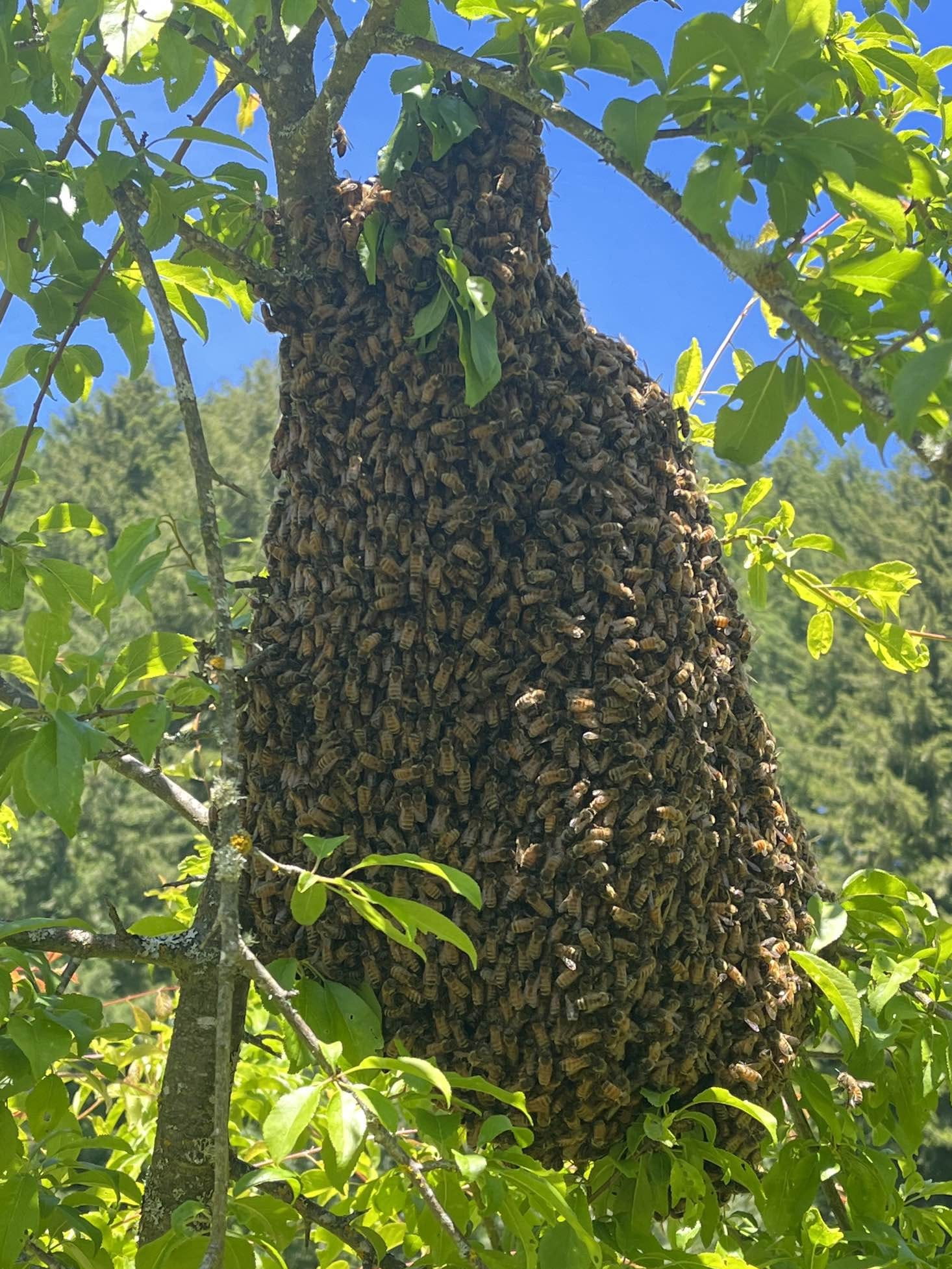
That’s a lot of bees in one place—a honeybee swarm gathered on a tree branch.
Why You Shouldn’t Just Kill the Bees and Leave the Hive in the Wall
Honey bees are remarkable builders. Unlike bumble bees, which generally use existing cavities and construct relatively small wax structures, honey bees can build extensive sheets of wax comb. These combs are used to raise young bees and store honey and pollen, and an established colony can accumulate a substantial amount of material over time.
While the colony is alive, the bees actively maintain the hive. They regulate temperature, repair comb, move air through the nest, and manage their stored food. They also help defend the colony against certain pests that would happily take advantage of an unattended supply of honey and wax.
Remove the bees, or kill them, and all that maintenance stops.
Without the colony to regulate conditions and maintain the comb, wax can soften or deteriorate, particularly in hot wall cavities. Honey may leak into insulation, drywall, or other building materials, leaving sticky stains and potentially causing damage. The remaining honey, pollen, wax, and dead brood can also attract ants, wax moths, beetles, rodents, and other scavengers.
Imagine leaving several pounds of honey, wax, and organic material sealed inside your wall during an Oregon summer. That’s not something I’d recommend.
The larger and older the colony, the more material there may be to deal with. In some cases, homeowners discover the problem only after honey begins seeping through a wall or insects start appearing around the abandoned hive.
This is why removing an established honey bee colony from a structure should include a plan for removing the comb and stored honey, not just the bees. A specialist who performs structural honey bee removals—sometimes called a cut-out—may need to open part of the wall or another building component to access the colony and remove the hive material. Once everything has been cleaned out, the opening should be repaired and sealed to discourage another colony from moving into the same cavity.
It’s also important not to simply seal the entrance while the colony is active. Trapped bees may search for another exit, potentially finding their way into living spaces, while the hive materials remain inside the structure. If you’re hiring someone to remove honey bees from a wall, ask specifically whether they’re removing the comb and honey, and how the structure will be repaired afterward. Not every beekeeper who collects swarms performs structural removals, and they may have to work in tandem with a contractor to see the job through.
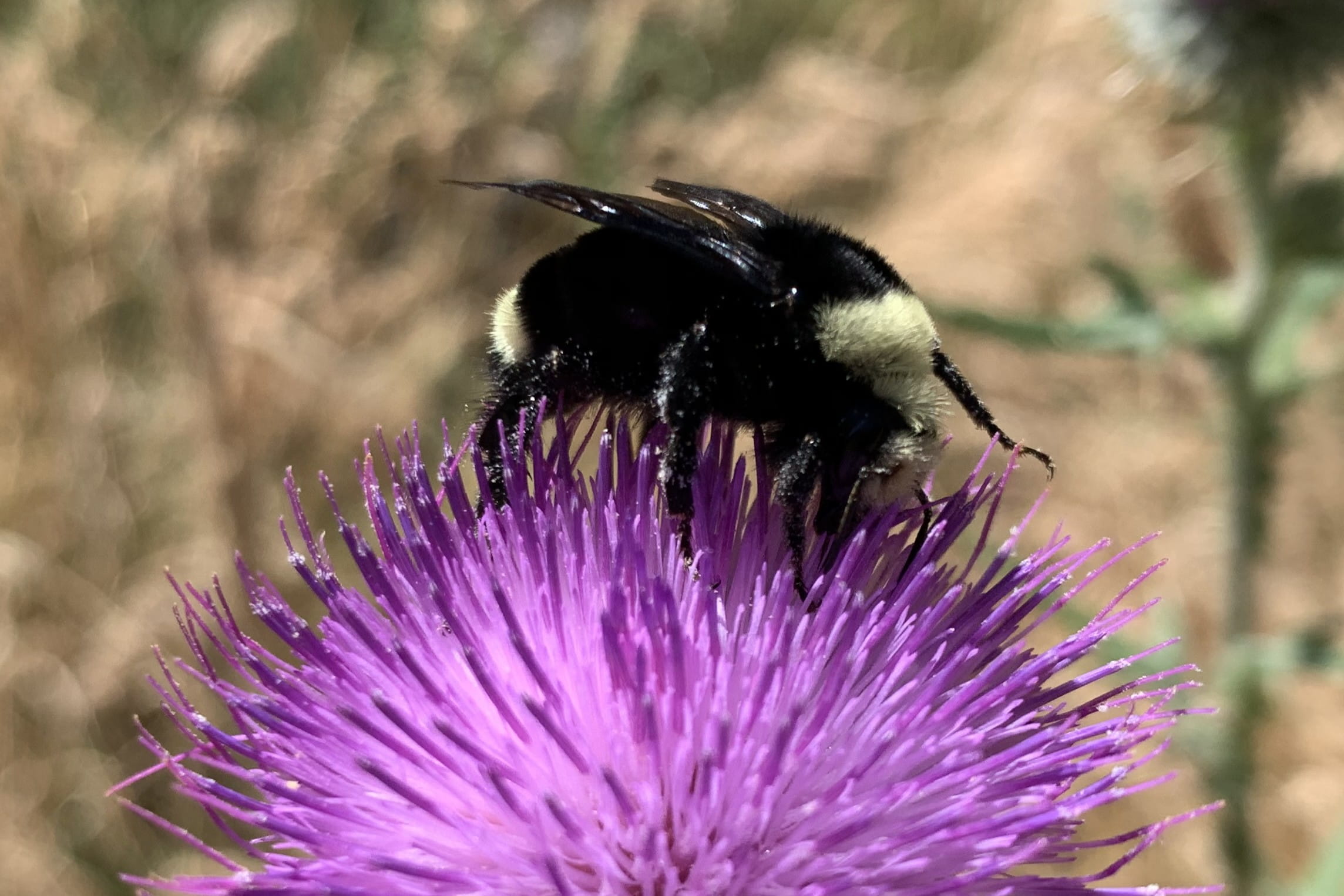
A bumblebee pauses on a purple thistle, showing off its distinctly fuzzy build.
What About Bumble Bees?
Bumble bees are a different story, and in many cases the best solution is simply to leave them alone.
Most bumble bee species in Oregon establish annual colonies. A queen emerges from overwintering in the spring, finds a suitable nesting location, and begins raising workers. Over the summer, the colony grows and eventually produces new queens and males. By the end of the season, the old queen, workers, and males die, while newly mated queens disperse to overwinter elsewhere.
In other words, that bumble bee nest beneath your shed isn’t planning to become a permanent family estate.
Bumble bees often nest in abandoned rodent burrows, beneath sheds, in insulation, inside compost piles, or in other sheltered cavities. Their nests are usually much smaller than honey bee colonies, and they don’t create the same large stores of honey or extensive comb structures.
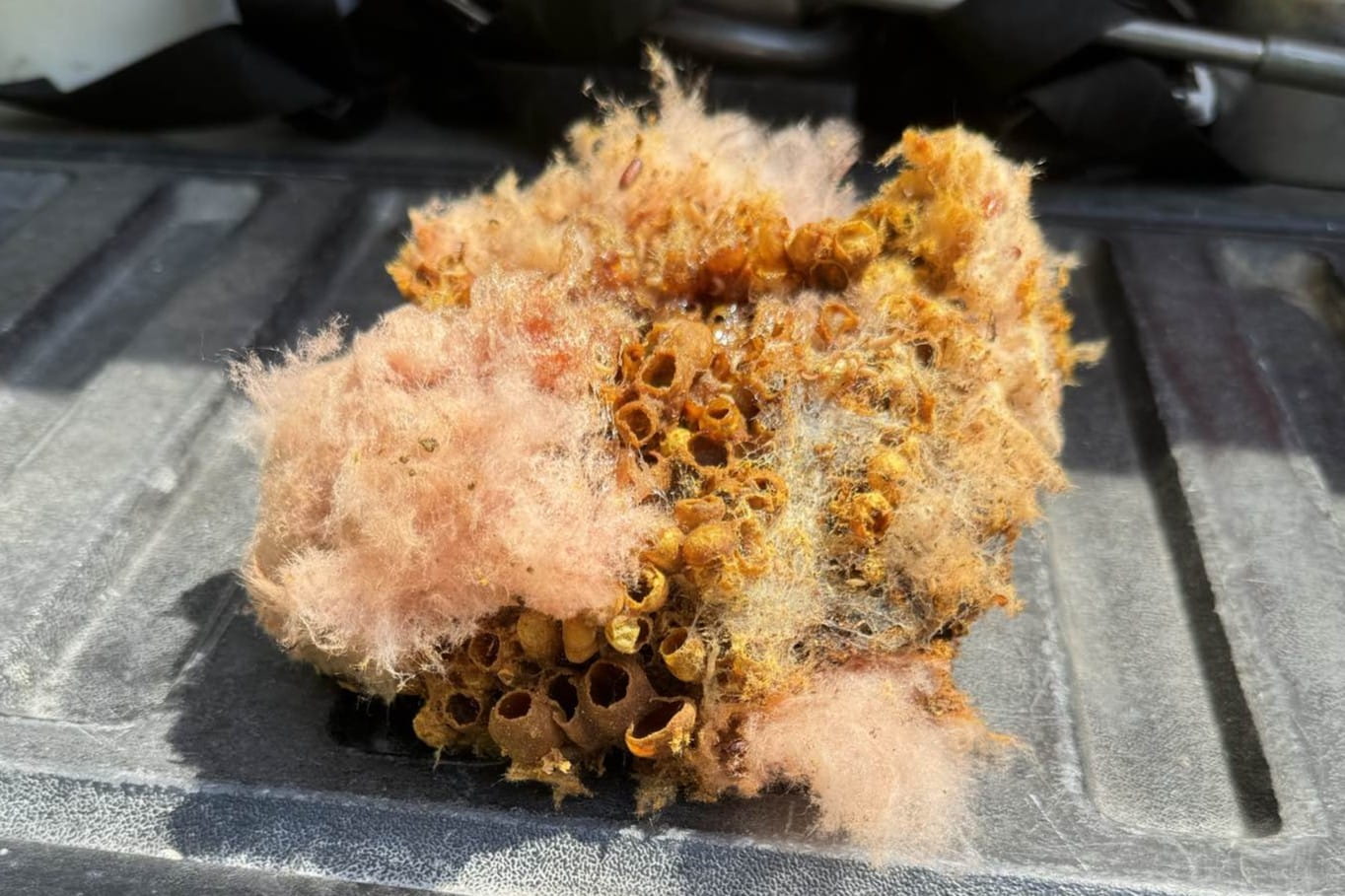
A closer look at a bumblebee nest tucked into insulation, with its irregular wax cells exposed.
If the nest is somewhere that people and pets can reasonably avoid, leaving it alone until the colony naturally finishes its life cycle is often the most practical approach.
You may be able to reduce conflicts by keeping children and pets away from the entrance, temporarily changing a mowing route, or avoiding activities that create vibration directly around the nest.
If the nest is in a high-traffic location, near someone with a serious sting allergy, or somewhere that makes avoidance impractical, contact a specialist familiar with bumble bee relocation and local pollinator conservation. Relocating an established bumble bee nest can be difficult, and not every colony can be moved successfully.
Don’t seal an active nest entrance or attempt to dig it out yourself. Disturbing the nest can provoke defensive behavior and create a much larger problem than the one you started with.
Are Honey Bees and Bumble Bees Dangerous?
Both honey bees and bumble bees can sting, and both may defend their colonies when they perceive a threat. But neither is generally interested in chasing people around the yard without a reason.
A bee visiting flowers is usually focused on collecting nectar or pollen. It has considerably better things to do than pick a fight with you.
The situation changes when you’re near an established nest, particularly if you’re disturbing the entrance, creating vibrations, or physically interfering with the colony. Honey bees can recruit numerous workers to defend their hive, while bumble bees may also sting repeatedly when defending a nest.
For most people, a sting is painful but manageable. For someone with a serious allergy to bee venom, however, even a single sting can cause a life-threatening reaction. Difficulty breathing, throat or tongue swelling, faintness, or other signs of anaphylaxis require immediate emergency medical attention.
If you know someone in the household has a serious sting allergy, that should factor heavily into how you manage a nearby colony.
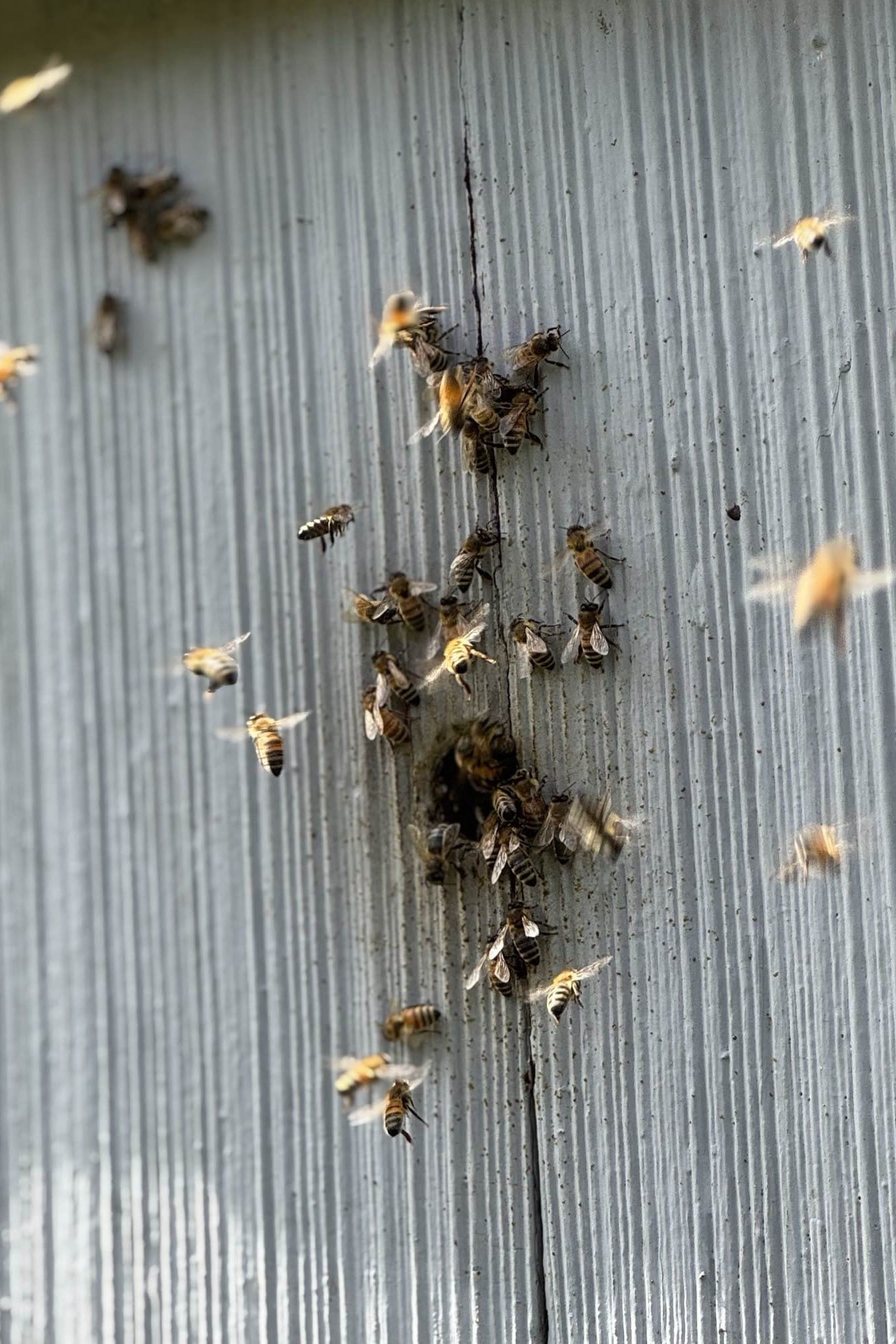
A busy entrance: honeybees gather around a small opening in the siding.
Should I Try to Remove the Nest Myself?
Generally, no. At least not if we’re talking about an established colony.
Honey bee removal from a structure can involve thousands of defensive insects, protective equipment, specialized tools, and opening portions of a building. Even collecting a swarm requires experience and appropriate equipment.
Bumble bee nests are often hidden in locations that make them difficult to access without disturbing the colony. Digging into a burrow or moving a shed to investigate is a pretty effective way to turn a manageable situation into an unpleasant afternoon.
I’d also discourage the various homemade remedies floating around the internet. Pouring boiling water, gasoline, household cleaners, or other substances into a nest is dangerous, can contaminate the surrounding environment, and may not solve the problem.
The first step should be identification, followed by an assessment of whether the colony actually needs to be removed.
What Can Good Earth Pest Company Do?
Although Good Earth doesn’t perform honey bee or bumble bee treatments, we’re still happy to offer advice when customers contact us about these insects.
We can help you understand the differences between the two, discuss whether the nesting location presents a significant concern, and explain why some situations are better handled by a beekeeper or specialist who performs structural bee removal.
For honey bees established inside a wall, we’ll emphasize the importance of removing the hive materials along with the colony. For bumble bees in an out-of-the-way location, we may recommend allowing the colony to finish its natural life cycle rather than disturbing it.
Not every insect problem requires an insecticide, and not every insect needs to be removed simply because it’s living somewhere on your property. Part of good pest management is knowing when intervention is appropriate and when leaving something alone is the better option.
Final Thoughts
I’m a big fan of bees. They’re fascinating animals, they provide important pollination services, and most of the time we can coexist with them without any trouble. I also understand that discovering a colony inside your bedroom wall or beneath the steps to your front door can change your feelings about them pretty quickly.
The important thing is to understand what you’re dealing with before deciding how to respond. Honey bees and bumble bees may look similar to the casual observer, but their biology, nesting habits, and potential impact on your property are quite different.
If you have a bumble bee colony in an area you can avoid, waiting it out may be the easiest solution. If honey bees have established themselves inside a wall, professional removal that addresses both the bees and the hive materials is usually the better long-term approach.
And if you’re not sure what kind of bees you’ve got, feel free to contact Good Earth Pest Company. We may not be the ones removing the colony, but we’re happy to help you figure out what to do next.
Sometimes the best pest control advice is knowing when not to use pest control.