

Hotels and motels are interesting places from a pest control perspective because they are comprised of several different types of commercial accounts smashed together. You’ve got dozens (or hundreds) of bedrooms, laundry facilities, food storage, dumpsters, landscaping, utility rooms, housekeeping areas, and sometimes a full commercial kitchen and restaurant. Then, just to keep things interesting, you have a constantly rotating population of people arriving with luggage from all over the country—or the world.
That’s a lot of opportunities for pests, and it also means a cookie-cutter pest control program doesn’t make much sense. The cockroaches behind a dishwasher require a completely different approach than the mouse somebody saw near the dumpster, and neither problem has much in common with the bed bug that hitched a ride into room 214 yesterday afternoon.
This is an area where Good Earth Pest Company really shines. We don’t need every hotel to fit into the same little service box. We can build a program around the property, adjust it as conditions change, and provide everything from routine general pest and rodent service to bed bug treatments, cockroach cleanouts, spider control, and service in food-handling areas. Just as importantly in hospitality, we can do it professionally and discreetly without making pest control part of the guest experience.
Key Takeaways
- Hotels and motels contain a variety of environments, so pest control needs to be adaptable.
- Good Earth can tailor service frequency, monitoring, treatment methods, and areas of focus to the individual property.
- Services can include general pest control, rodent management, bed bug inspection and treatment, cockroach control, spider service, and intensive cleanouts.
- We can work in kitchens and other food-handling environments where treatment choices and application methods require additional care.
- Discretion matters. Pest control shouldn’t become part of the guest experience.
- Experienced technicians and good communication with hotel staff are just as important as the treatments themselves.
One Property, A Lot of Different Pest Problems
The interesting thing about hotels is how much conditions can change just by walking down the hallway. Guest rooms provide one environment, while laundry rooms, kitchens, utility areas, storage spaces, and dumpsters provide completely different ones. Add landscaping, exterior lighting, patios, vending areas, housekeeping carts, food deliveries, and hundreds of opening and closing doors, and you’ve created a property with a lot of moving parts.
That’s why our first job is understanding the property. What pests have historically been a problem? Where are the food-handling areas? Where does housekeeping store supplies? How is trash handled? Are there particular rooms or buildings that have recurring problems? What has the maintenance staff noticed?
Once we understand how the property functions, we can start building a pest management program around it. That may include regularly scheduled preventative service, monitoring in sensitive areas, exterior treatments, exclusion recommendations, sanitation recommendations, or additional services targeting particular pests.
And the program doesn’t have to stay exactly the same forever. Pest pressure changes. Buildings change. Seasons change. A good commercial program should be able to change with them.
General Pest and Spider Control
Hotels encounter many of the same general pests we see in homes and other businesses: ants, occasional invaders, wasps, spiders, and a rotating cast of insects that manage to wander through an open door and immediately become somebody’s emergency.
Regular service gives us an opportunity to work preventatively. We can inspect the exterior, look for conducive conditions, remove accessible spider webs, monitor known trouble areas, and make targeted treatments where they’re appropriate. If housekeeping or maintenance has noticed activity somewhere, that information can be incorporated into the service instead of waiting for us to stumble across it.
Spider control is a good example of why the details matter. Spiders aren’t generally invading a hotel because they’ve developed a particular fondness for the accommodations. They’re predators, and properties with lots of flying insect activity can support lots of spiders. Exterior lighting, vegetation, structural features, and available prey can all contribute to web building around entrances, walkways, windows, and guest-room doors.
We can remove webs and treat appropriate areas, but we can also look at why the spiders are doing so well there. Sometimes changing a light or trimming vegetation is part of the solution. That’s Integrated Pest Management in its least glamorous form, but it works.
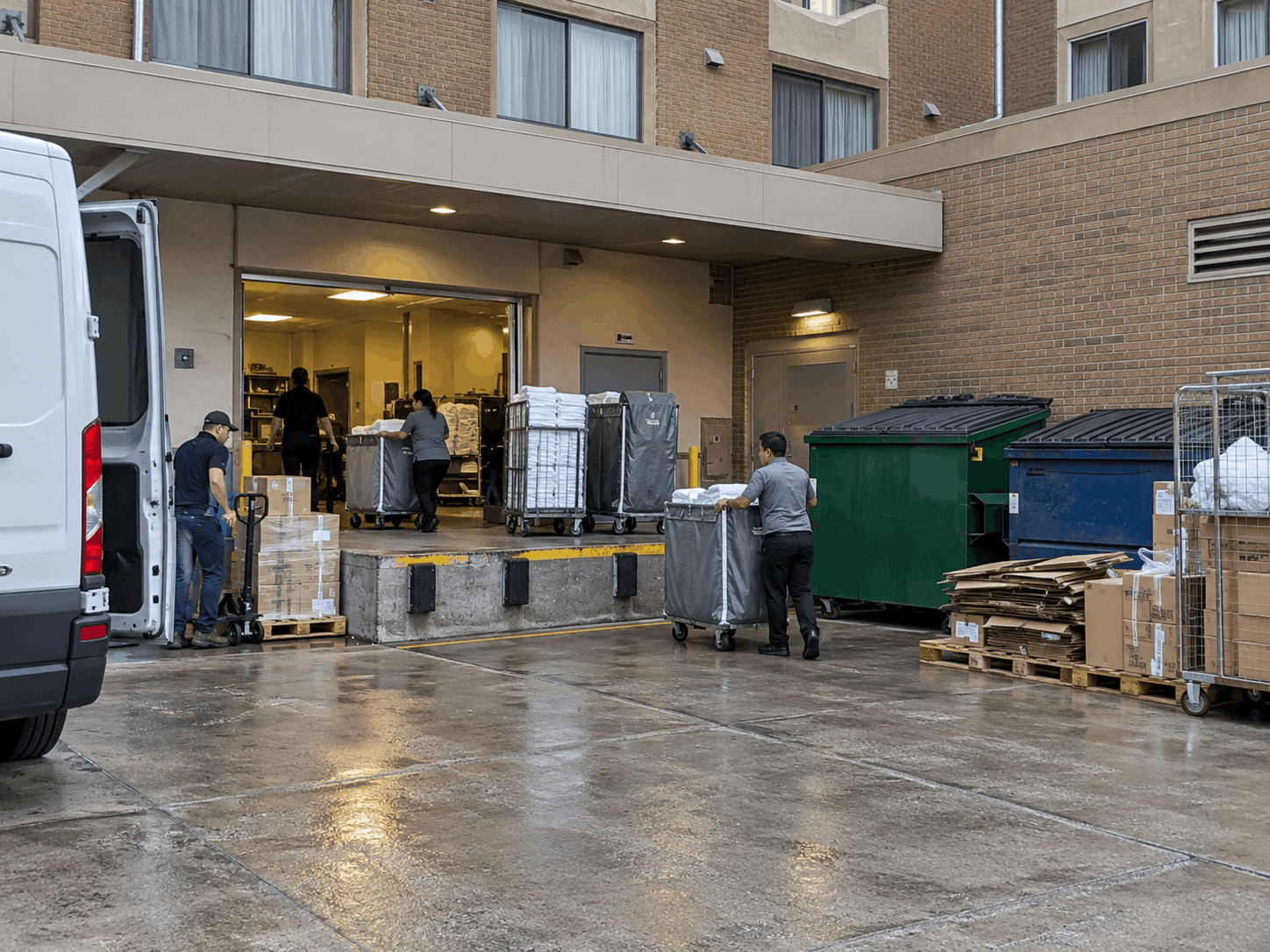
Deliveries, open service doors, and waste storage make hotel loading docks an important focus for pest prevention.
Rodent Management: More Than Putting Out Bait Stations
Hotels can provide mice and rats with pretty much everything they’re looking for: food, water, shelter, and plenty of places where nobody wants to crawl around looking for them. Dumpsters, kitchens, landscaping, utility penetrations, storage areas, loading areas, and exterior doors can all contribute to rodent activity.
Our rodent programs can include exterior monitoring and bait stations, interior trapping where appropriate, inspections for entry points, and recommendations for exclusion and sanitation. More importantly, we’re trying to understand why the rodents are there. Removing a mouse is great. Finding the half-inch gap under the service door that allowed it inside is considerably better.
This is also an area where communication with hotel staff becomes incredibly valuable. A technician visits the property periodically; hotel employees are there every day. If maintenance sees droppings in a utility room or housekeeping notices activity on the third floor, we want to know about it. Those observations can tell us things that a bait station alone never will.
Bed Bugs Are Their Own Animal
Bed bugs deserve special attention in hospitality because they’re fundamentally different from most of the other pests we’re discussing. You can have an exceptionally clean, well-maintained hotel and still have a guest arrive carrying bed bugs in their luggage. Bed bugs are hitchhikers, and hotels happen to operate the world’s most efficient luggage exchange program.
The important thing is how the property responds.
A suspected bed bug shouldn’t automatically become a confirmed bed bug. Skin reactions alone aren’t enough to identify the culprit, so we want to inspect the room and look for physical evidence such as live insects, eggs, cast skins, or fecal spotting. If bed bugs are confirmed, we can determine the extent of the activity and develop an appropriate treatment plan. Depending on what we find, that investigation may include areas beyond the room where the original complaint occurred.
Quick communication between housekeeping, management, and the pest professional can make an enormous difference here. Staff who know what bed bug evidence looks like are another set of eyes on the property, and early detection is considerably easier to deal with than discovering a well-established infestation.

Busy hotel kitchens need consistent cleaning, proper food storage, and pest monitoring to keep service running smoothly.
Cockroaches, Kitchens, and Food-Handling Areas
If your hotel has a restaurant, bar, commercial kitchen, breakfast area, or other food service, that adds another layer to the pest program. These areas provide food, water, heat, and harborage—the four-star accommodations of the cockroach world.
Cockroach control requires inspection and monitoring because we need to determine where the population is concentrated. Depending on the situation, we may use baits, insect growth regulators, targeted crack-and-crevice treatments, or other appropriate tools. At the same time, we’re looking for the conditions that let these populations thrive: moisture underneath equipment, food debris, floor drains, gaps around plumbing, cardboard storage, inaccessible grease buildup, or other harborage.
Food-handling environments also require technicians who understand that we can’t simply treat them like a garage. Products have specific labels governing where and how they can be used, and application methods need to account for food, food-contact surfaces, equipment, and the employees that occupy the space. Sometimes the most important recommendation we make isn’t a pesticide application at all. It may be cleaning underneath a particular piece of equipment, repairing a drain, or sealing a utility penetration.
Sometimes You Need More Than Routine Service
Routine preventative service works extremely well when we’re maintaining a property that’s already under control. Unfortunately, that’s not always where we meet.
Sometimes we walk into a room, kitchen, apartment-style unit, storage area, or other part of a property where the pest population has gotten well beyond what routine service is designed to handle. Severe cockroach infestations are a good example. At that point, putting down a few monitors and promising to check back next month isn’t going to cut it.
Good Earth can perform more intensive cleanout services when a situation calls for them. These are designed around getting a significant infestation under control and may involve much more extensive inspection, treatment, monitoring, preparation, and follow-up than a normal service visit. Once we’ve knocked the population down and corrected the conditions contributing to it, we can transition the area back into a more preventative maintenance program.
That’s part of what we mean when we talk about adaptable service. We can turn the intensity up when the situation requires it and back down when we’ve regained control.
Pest Control Without Putting on a Show
Discretion matters in hospitality. There’s nothing particularly unusual about a hotel having pest control service—I’d be considerably more concerned about the hotel that doesn’t—but your guests don’t need to be involved in the process.
Our technicians understand that they’re working inside someone else’s business. That means being professional around guests, communicating appropriately with employees, coordinating access when necessary, and being thoughtful about where and when certain work is performed. If we’re responding to a sensitive problem, we’re not interested in announcing it to everyone within earshot of the front desk.
Sometimes service needs to happen around housekeeping. Sometimes a kitchen is only accessible during certain hours. Sometimes management needs a technician to inspect something without disrupting guests in neighboring rooms. Those aren’t inconveniences to the pest program; they’re part of designing a pest program for a hotel.
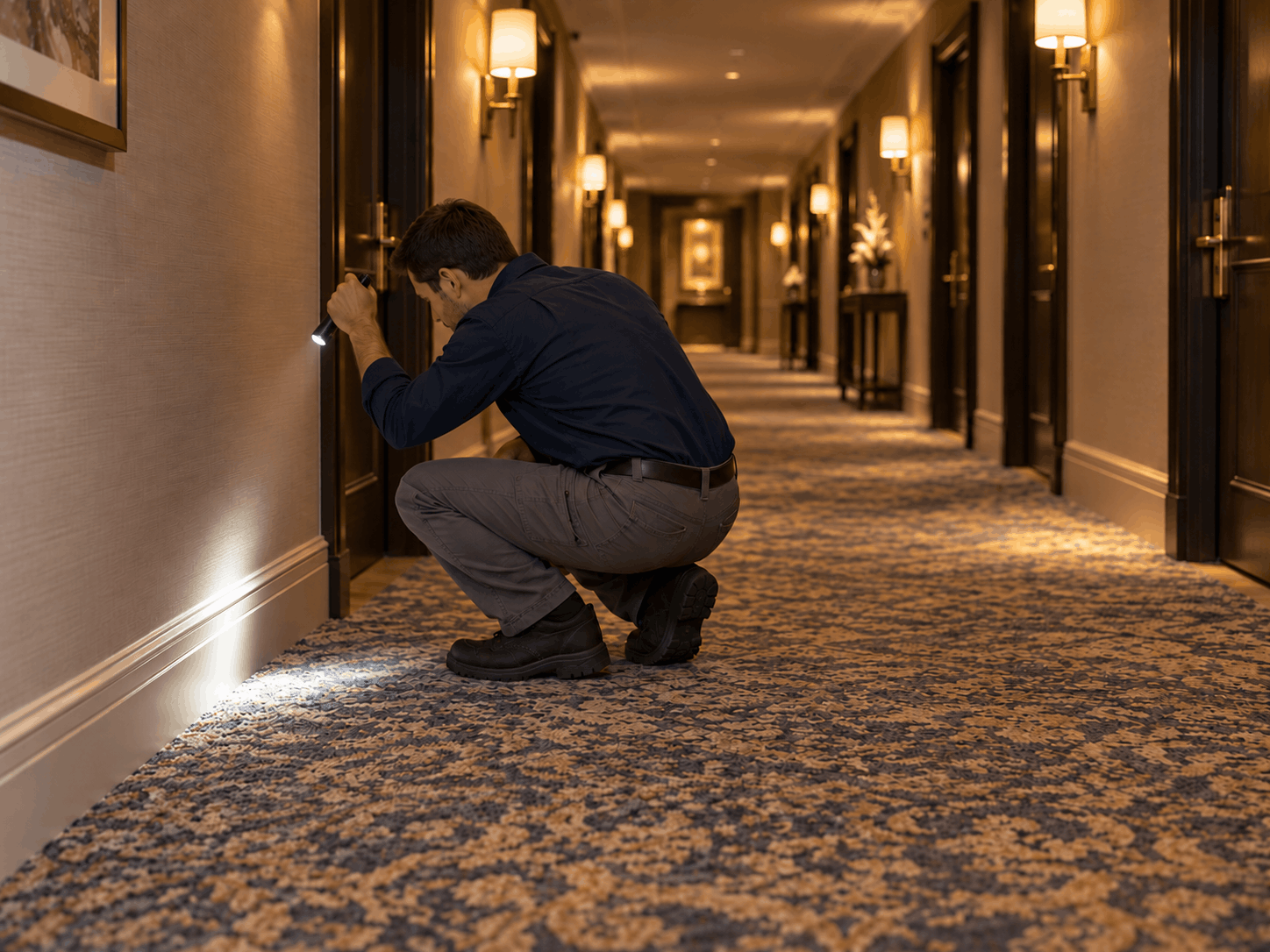
Discreet, detailed inspections help identify pest activity before it disrupts the guest experience.
The Technician Matters
You can put all the right equipment in a service vehicle and still have a mediocre commercial pest program. The technician has to know what they’re looking at and be able to adapt when the situation in front of them doesn’t match what was expected on the schedule.
Our technicians are trained to identify pests, understand their biology, inspect for conducive conditions, select appropriate treatment methods, read and follow pesticide labels, recognize sanitation and exclusion issues, and communicate what they’re finding. In a hotel, they also need to be comfortable working with everyone from maintenance and housekeeping to kitchen staff and management.
That’s especially important when multiple pest issues overlap. A technician may be checking exterior rodent stations, investigating an ant complaint in a guest room, looking at cockroach monitors in a kitchen, and removing spider webs around an entrance during the same visit. Those aren’t four completely separate worlds. They’re pieces of the same property, and an experienced technician can start seeing how those pieces fit together.
Building a Program Around Your Hotel
A 20-room roadside motel and a 200-room hotel with a restaurant, commercial kitchen, conference center, and acres of landscaping shouldn’t have identical pest-control programs. They may share some of the same pests, but the service requirements, risks, access, monitoring, and level of response can be completely different.
That’s one of the things we like about commercial pest management at Good Earth Pest Company. We can tailor the program to the property instead of trying to make the property fit a predetermined program. Maybe you need routine general pest and rodent service with occasional bed bug inspections. Maybe you need intensive cockroach work in a kitchen followed by ongoing monitoring. Maybe spiders are your biggest recurring guest complaint. Maybe you’ve got all of the above.
We can work with that.
Final Thoughts
A good hotel pest program should mostly operate in the background. Guests shouldn’t have to think about the ants outside their room, the mouse that isn’t getting through the back door, the cockroach population that never became established, or the bed bug that housekeeping spotted before it became a larger problem. When commercial pest management is working well, much of its success is measured by things that never happen.
That’s what we’re trying to build: a practical, adaptable pest management program that works with your property, your staff, and your operation. If something changes, we change with it. If something unusual shows up, we investigate it. And if you’ve inherited a pest problem that needs considerably more firepower than routine service, we can handle that too.
If you’re looking for pest management for a hotel or motel, give Good Earth Pest Company a call, or you can click HERE to learn more. We’ll take a look at the property, figure out what you actually need, and build the service from there.