
Types of Ants in Oregon
Two ant species cause most of the problems Oregon homeowners and businesses call us about: Odorous House Ants (OHA) and Carpenter Ants. OHA are small — roughly 1/8 inch, dark brown, with a distinctive smell when crushed (the name comes from that). Carpenter Ants are much larger, up to 1/2 inch, black or red-and-black, and are Oregon’s most common wood-destroying pest. The two need different treatment, so knowing which ant you have matters. Oregon’s wet spring pushes both species indoors — sugar ant activity peaks from spring through summer, while Carpenter Ants are most visible January through April.
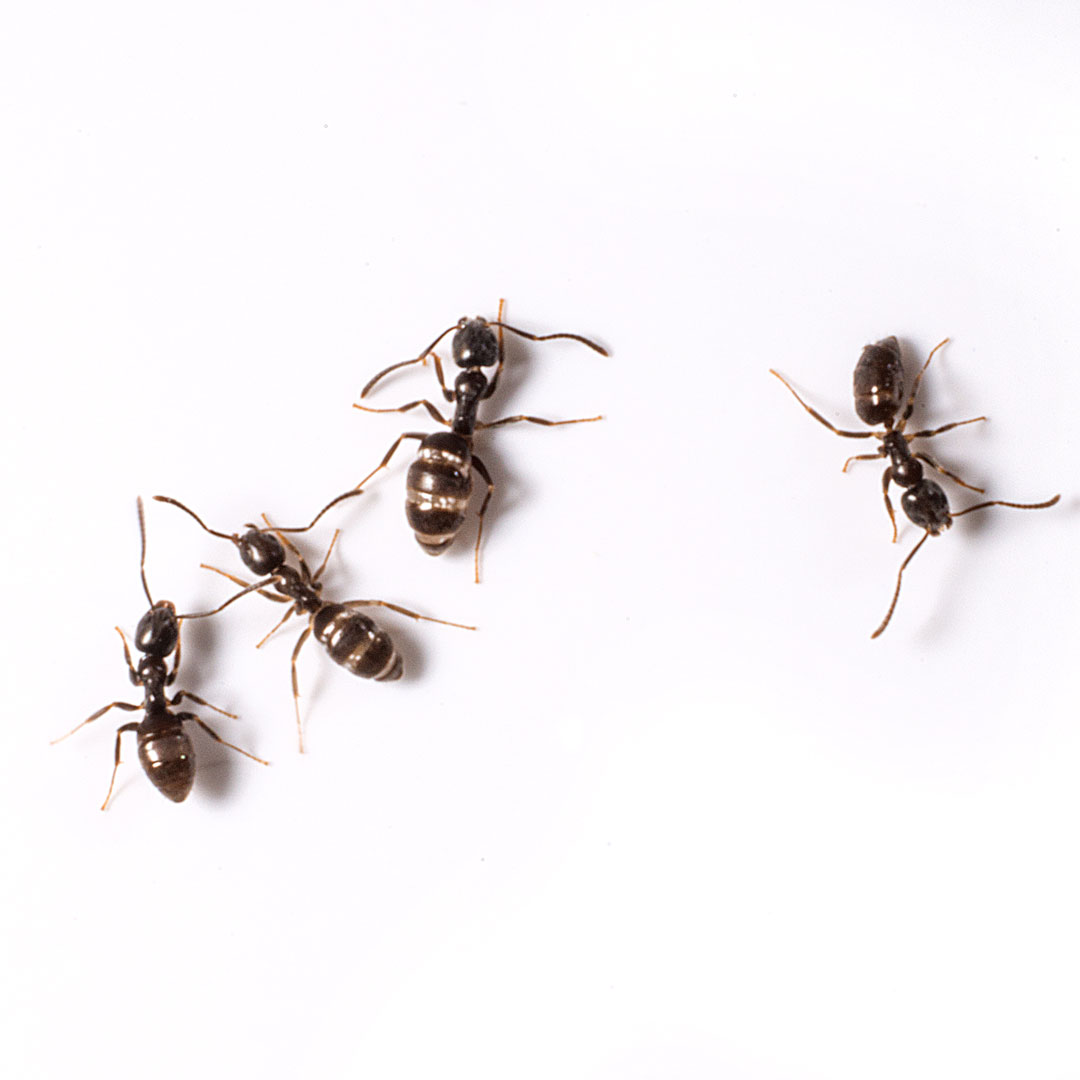
Small Ants can be quite a nuisance and there are several species (even some species of small carpenter ants) that live in Oregon, the most common one is the Odorous House Ant (OHA), also known as sugar ants, small ants, or grease ants. Its name comes from the smell it gives off when crushed. They have very large colonies, with multiple queens, that nest in soil or structures and relocate often — roughly once a month during peak activity from March through October, slowing to about every other month in winter. OHA typically enters buildings looking for resources, most commonly food. In Oregon, sugar ant pressure ramps up in spring as nests grow more active, and heavy summer rain (July–September) reliably stirs them up and pushes them indoors.
These ants do not cause any structural damage, but they can be quite the nuisance and are one of the most prolific pests we have in Oregon. When they invade kitchen areas, they tend to contaminate food products and food prep surfaces. We often see these unwanted pests showing up in bathrooms, living rooms, and even bedrooms searching for resources!
How do I get rid of Sugar Ants?
Sugar ants (Odorous House Ants) are tricky to deal with, and reaching for an over-the-counter spray usually backfires. It scatters the colony deeper into the structure instead of dealing with it. Here’s what helps:
- Clean up whatever is drawing them in: food, crumbs, spills, and standing water.
- Trim back any plants or branches touching the outside of your home, since that contact is a common entry point for small ants.
- Once a trail has cleared, wipe it down with soapy water to erase the scent path the ants follow.
- Avoid retail sprays on the trails. They tend to kill only a few foragers and can split the colony, making things worse.
If they keep coming back, that’s the time to call a professional. Material application is best left to a technician, and with decades of experience battling these ants across the Willamette Valley, we can find where they’re getting in, what’s attracting them, and help keep them out. For a deeper look at Odorous House Ants, including why they’re so hard to control and how we treat them, see our Oregon Odorous House Ants guide. “Hard on Bugs, Soft on You.”
What do Carpenter Ants look like?
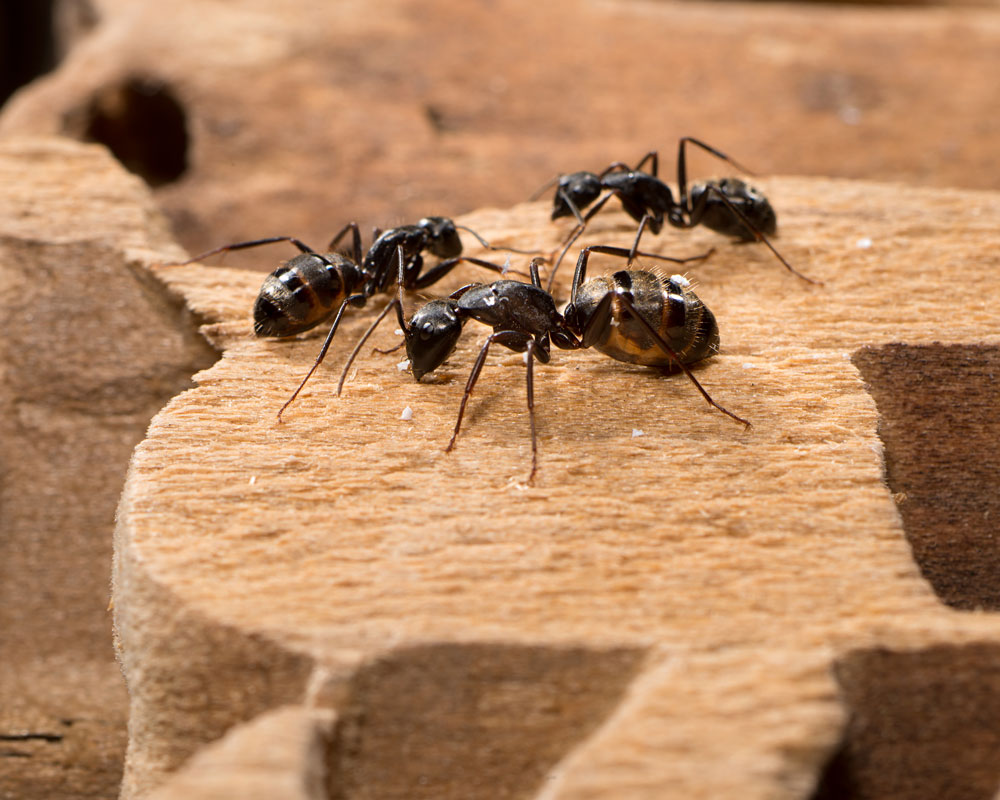 Carpenter Ants are the most common Wood Destroying Organism that we have in Oregon. They are easily recognizable, varying in size from 1/8″ to 1/2″ and black to red and black in color. Several species of Carpenter Ants live in Oregon; each species, if left unattended, will cause damage. Carpenter ants do not eat wood like a termite but will mine wood and other building materials for a nest.
What are the signs of a Carpenter Ant infestation?
- Individual carpenter ants are seen within the living space, especially during the first part of the year (January-April)
- A line of workers trafficking on the exterior of your building
- Accumulation of sawdust-like debris
- Sound, sometimes you can actually hear them in the walls removing wood
- The presence of swarmers, the winged reproductive stage. It is completely normal to see these on the exterior during certain seasons but seeing a large number inside or coming from your home is a red flag of a possible infestation.
How do I treat for Carpenter Ants?
- Physical removal of the nest. If a nest is discovered during a construction project or is easily accessible, physical removal of the ants themselves and the damaged wood is sometimes the best option.
- Remove Conducive Conditions. Sometimes, Carpenter Ants are there for a reason. If the nesting area is damaged by moisture, then that issue also needs to be addressed for future prevention.
- Material application. This step is best left to professionals. At Good Earth, our Carpenter Ant treatment uses a professional-grade, non-repellent liquid applied around the foundation and key entry points. Because the ants can’t detect it, they carry it back into the colony as they travel — eliminating the whole nest rather than just the ants you see — with long-lasting protection and minimal disruption to your property. Exact treatment procedures will vary by company and ongoing service
How do I get rid of Sugar Ants?
Sugar ants (Odorous House Ants) are tricky to deal with, and reaching for an over-the-counter spray usually backfires. It scatters the colony deeper into the structure instead of dealing with it. Here’s what helps:
Clean up whatever is drawing them in: food, crumbs, spills, and standing water.
Trim back any plants or branches touching the outside of your home, since that contact is a common entry point for small ants.
Once a trail has cleared, wipe it down with soapy water to erase the scent path the ants follow.
Avoid retail sprays on the trails. They tend to kill only a few foragers and can split the colony, making things worse.
If they keep coming back, that’s the time to call a professional. Material application is best left to a technician, and with decades of experience battling these ants across the Willamette Valley, we can find where they’re getting in, what’s attracting them, and help keep them out. For a deeper look at Odorous House Ants, including why they’re so hard to control and how we treat them, see our Oregon Odorous House Ants guide. “Hard on Bugs, Soft on You.”
What do Carpenter Ants look like?
Carpenter Ants are the most common Wood Destroying Organism that we have in Oregon. They are easily recognizable, varying in size from 1/8″ to 1/2″ and black to red and black in color. Several species of Carpenter Ants live in Oregon; each species, if left unattended, will cause damage. Carpenter ants do not eat wood like a termite but will mine wood and other building materials for a nest.
What are the signs of a Carpenter Ant infestation?
Individual carpenter ants are seen within the living space, especially during the first part of the year (January-April)
A line of workers trafficking on the exterior of your building
Accumulation of sawdust-like debris
Sound, sometimes you can actually hear them in the walls removing wood
The presence of swarmers, the winged reproductive stage. It is completely normal to see these on the exterior during certain seasons but seeing a large number inside or coming from your home is a red flag of a possible infestation.
How do I treat for Carpenter Ants?
Physical removal of the nest. If a nest is discovered during a construction project or is easily accessible, physical removal of the ants themselves and the damaged wood is sometimes the best option.
Remove Conducive Conditions. Sometimes, Carpenter Ants are there for a reason. If the nesting area is damaged by moisture, then that issue also needs to be addressed for future prevention.
Material application. This step is best left to professionals. At Good Earth, our Carpenter Ant treatment uses a professional-grade, non-repellent liquid applied around the foundation and key entry points. Because the ants can’t detect it, they carry it back into the colony as they travel — eliminating the whole nest rather than just the ants you see — with long-lasting protection and minimal disruption to your property. Exact treatment procedures will vary by company and ongoing service.
If you have seen or think you have Carpenter Ants in your home or place of business, we can help. Carpenter Ant infestations are best handled by a professional and Good Earth Pest Company can effectively eliminate Carpenter Ants without placing any materials in your living space or defacing the outside of your structure. We’ve used a low-impact approach since 1989 — for ants, that means choosing the least toxic option that still gets the job done: lowest toxicity to people and pets, effective at a low dose, and low impact on the surrounding environment. Most of what we use carries only a “CAUTION” label, the lowest signal word for human toxicity.
Have Pests? Call (or Text) Today
Both Carpenter Ants and Odorous House Ants are covered under our Standard Insect Program — if they show up between scheduled visits, we come back and treat it at no additional cost.
Good Earth Core Values
These values are the guide to every decision we make.
- Going above and beyond expectations for our clients.
- Accountability and integrity in everything we do.
- Safety for the environment, our clients, and ourselves.
- The Good Earth Family: Work as a team and always treat each other with respect and support.
Connect
Contact
Visit:
29030 Hwy 34
Corvallis, Oregon
97333-2220